Come, ye daughters, help me lament…
On the Daughter of Zion and the wedding of the Lamb.
You may know the feeling. The first chords of the opening chorus of the Matthäus-Passion sound. The driving rhythm alone is enough to fill the throat. You are drawn into the music, and when the choir begins to sing Kommt, ihr Töchter, helft mir klagen, you are away: it sounds magnificent, you feel that great things are about to happen — but what is this chorus actually about?
- Who is speaking here?
- Who are these ‘daughters’ who are to help with the lamenting?
- And what exactly is being lamented?
You reach for the programme booklet, but that does not get you much further. The central figure appears to be called Zion, or the daughter of Zion. Perhaps you think of The Matrix; perhaps you remember that it is an old name for Jerusalem. But what does that mean here? You read the note in the booklet and are told that on the via dolorosa Jesus once addressed a group of weeping women as ‘daughters of Jerusalem’.1 That does not help much either. Here Zion seems rather to be the name of a woman who is about to be married and who is anxious about the bridegroom (Sehet! — Wen? — den Bräutigam). Something is the matter with him. But what? And just as you begin to wonder, the image shifts: it is now about the Lamb of God, and the boy sopranos begin to sing a chorale — a German version of the Agnus Dei. What sort of strange text is this?
As strange and obscure as we find this text, so self-evident and clear was it to Bach and to the churchgoers of his day.
The Daughter of Zion
In Bach’s day the opposite held: that Daughter of Zion — who did not know her? If only from the well-known hymn Wachet auf, ruft uns die Stimme. There it is she, Zion, who hears the watchmen singing (Zion hört die Wächter singen, second stanza), and that makes her heart leap for joy. The whole stanza is given in the commentary on the cantata of the same name, BWV 140. This is the text that sounds along in the famous Schübler chorale for organ. (Do the organists who play that music realise as much?)
Why does Zion’s heart leap for joy when she hears the watchmen sing? Because her friend is coming: her beloved, her bridegroom. And here you may let yourself go — really: you may sail away on a sea of associations, provided they are biblical ones. That is what people did in Bach’s day too.
- Think of Jesus’ parable of the wise and foolish bridesmaids, twice five, who wait for the bridegroom. The parable itself does not say so, but there is nothing to prevent us calling the unnamed bride Zion and rechristening the bridesmaids ‘daughters of Jerusalem’. That is precisely what Nicolai does in his hymn. But go on — Nicolai did, and with him every preacher in Bach’s day.
- ‘Rejoice greatly, O daughter of Zion; shout, O daughter of Jerusalem: behold, thy King cometh unto thee…’ That is the messianic prophecy from the First Testament that Matthew quotes to interpret Palm Sunday: Jesus is the king, and Zion is his beloved city.
- And where lamenting is concerned: why not think of the Lamentations of Jeremiah, where the ‘daughter of Zion’ — no longer a young bride but a widow grieving to death — sits weeping among the ruins of the once glorious city where God dwelt among men. And look: she calls on the bystanders to lament with her. Do you feel how the texture thickens, and how each new association adds meaning?
- And think, finally, of the girl in love in the Song of Songs, wandering through Jerusalem in search of her beloved. It is she who literally calls on the ‘daughters of Jerusalem’ — her companions, with whom she shares her fears and her joys — to help her look. She cannot find him; she is afraid something has happened to him.
The girl in the Song of Songs
Yes: that girl is the one you must think of. Ever since Bernard of Clairvaux preached eighty-six sermons on this biblical book in the twelfth century, it has been central to the church’s understanding of itself as the ‘bride of Christ’, and the ardent love between the two has become an image for the passion of Christ.
An endless stream of meditations, poems, hymns and motets sings of that covenant of love. Every physical detail in the Song of Songs — from let him kiss me with the kisses of his mouth to the desperate search for the lost beloved — acquired an allegorical meaning, always pointing to the intimate relation between the believer and Christ. The whole passion was read into it, in both senses of the word: suffering and ardour. The high point is the call in Song of Songs 3, where on this allegorical reading the suffering of Christ is already evoked — the crown of thorns. His mother, in this exposition, becomes ‘the synagogue’; anti-Judaism is never far away.
Go forth, O ye daughters of Zion, and behold king Solomon
Song of Songs 3:11
with the crown wherewith his mother crowned him
in the day of his espousals,
and in the day of the gladness of his heart.
Christ as the ‘bridegroom of the soul’ — Ruusbroec is not far away. Not because the soul, the human being, the believer, the bride, has deserved it, but purely out of love on Christ’s part: nigra sum, sed formosa. It is his love for her that makes her shine. What Bernard tried to impress upon his brethren in the monastery passed, in the Lutheran tradition, from the pulpit of the town church to the whole community of believers. The girl in love in the Song of Songs became the image of every believer. The longing and the loss that sometimes drive her to despair — ‘whither is my beloved gone?’ — became a standard homiletic ingredient of preaching; and so did her ecstasy when she finds her beloved and becomes one with him, in communion (communio).2
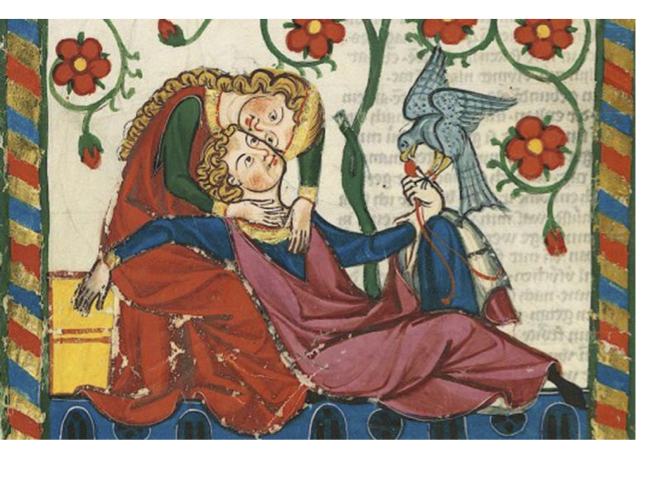
The wedding of the Lamb
The rest you can now supply yourself. The bridegroom is Christ. He wins his bride — so the church holds — by ‘giving his life for her’. The countless references to ‘the blood of Christ’ point to this, and at the same time to the eucharist. And when the bridegroom for whom the bride waits so painfully ‘appears’ in this world — an epiphany — John the Baptist in the gospel identifies him as ‘the Lamb of God, which taketh away the sin of the world’. With that he links the self-giving of Christ to the sacrifices offered in the temple, and in particular to the Passover lamb slaughtered on the eve of Pesach — an identification that the scenario of the St John Passion carries through as well. You see the meanings multiplying once more, and that is precisely the intention. John the Seer, finally, brings both images — bridegroom and lamb — together in the Apocalypse when he evokes the ‘wedding of the Lamb’. In a vision he sees ‘the Lamb standing as it had been slain’, and from every quarter the peoples of the earth stream in to celebrate his wedding: the moment when he is united with his beloved congregation, that is, with all who love him and who have been faithful. You know the painting; no further explanation required.
The Passion narrative is a historical event, certainly, but by being recited on Good Friday it becomes a present story for people of every age — timeless and time-bound at once. It is about how God in Christ makes his way towards humankind, driven by love; and how he reconciles himself with them, winning his ‘congregation’ as a bride by giving his life for her, as the Lamb of God that takes away the sin of the world (Sehet ihn! — Wie? — als wie ein Lamm). His death — on Anselm’s ancient doctrine of satisfaction — makes peace between man and God. Nun ist mein Herz zu Ruh’ gebracht. You need not believe it, and you may find the images dated or even objectionable; that does not alter the fact that this is the atmosphere in which the St Matthew Passion speaks for itself. Bach too was at home in this field of language.
Picander, 1729
Kommt, ihr Töchter, helft mir klagen,
Sehet – Wen? – den Bräutigam,
Seht ihn – Wie? – als wie ein Lamm!
O Lamm Gottes, unschuldig
Am Stamm des Kreuzes geschlachtet,
Sehet, – Was? – seht die Geduld,
Allzeit erfunden geduldig,
Wiewohl du warest verachtet.
Seht – Wohin? – auf unsre Schuld;
All Sünd hast du getragen,
Sonst müßten wir verzagen.
Sehet ihn aus Lieb und Huld
Holz zum Kreuze selber tragen!
Erbarm dich unser, o Jesu!
Translation
Come, ye daughters, help me lament,
see – whom? – the bridegroom,
see him – how? – as a lamb!
O Lamb of God, innocent,
slaughtered on the stem of the cross,
see – what? – see his patience,
found patient at all times,
however much you were despised.
look – where? – upon our guilt;
all sin you have borne,
else we should have to despair.
See him, out of love and grace,
carrying the wood of the cross himself!
Have mercy on us, o Jesus!
And in the last lines of the free text a third image appears: Isaac, who himself carries the wood on which his father Abraham is about to sacrifice him — almost. Read by the church from time immemorial as a foreshadowing of the sacrifice of Christ.
Good Friday Vespers
For the congregation in the Thomaskirche who first heard this opening chorus in April 1727, then, not a word of it was Greek. They recognised Zion’s call to the faithful to help her lament. They also knew that the Daughter of Zion stands for the bride of Christ, the community of believers in its pure and unspotted form — the ideal image of the church, as it were. When she is in conversation with ‘the faithful’, as in this opening chorus and several times more in the Passion, that is the church in dialogue with itself: a self-examination. The distance between the ideal and the reality is part of what is being examined, just as it is in the chorales.
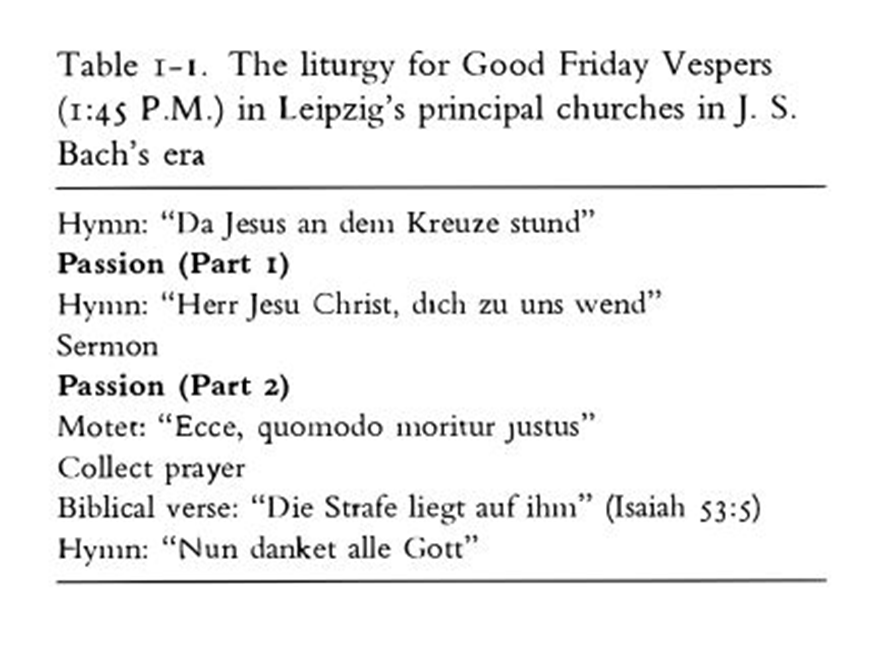
The Passion is in fact simply the musical part of the Good Friday sermon, as the liturgical order of the Vespers shows: between Part One and Part Two come a hymn, a prayer and a sermon. The role of the opening chorus is clear. It reminds the assembled congregation at once that during this service no story from long ago is going to be told at a safe distance, but that they are involved in the Passion of Christ from beginning to end, in life and in death: tua res agitur — it is your business that is being dealt with here.
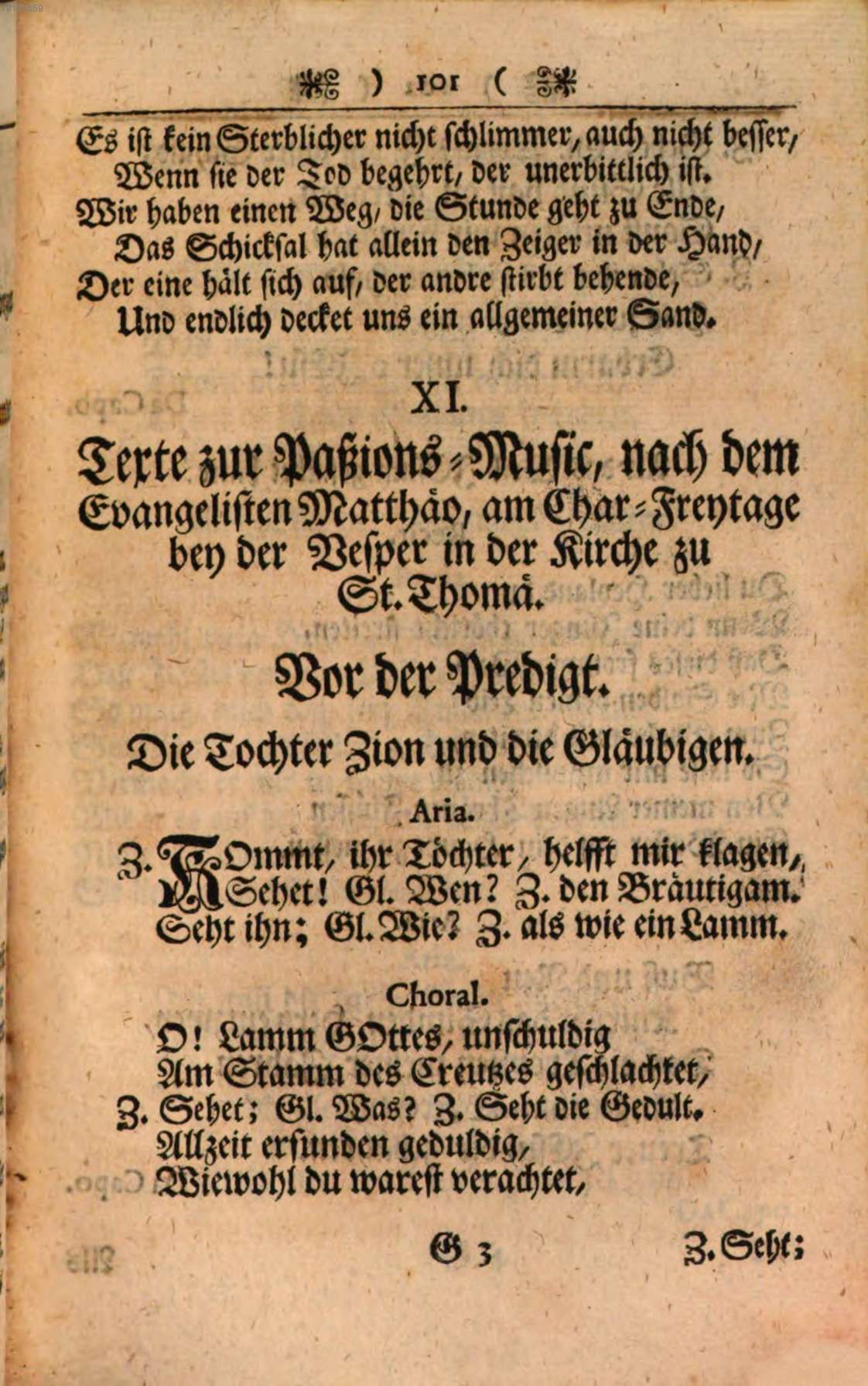
The printed libretto
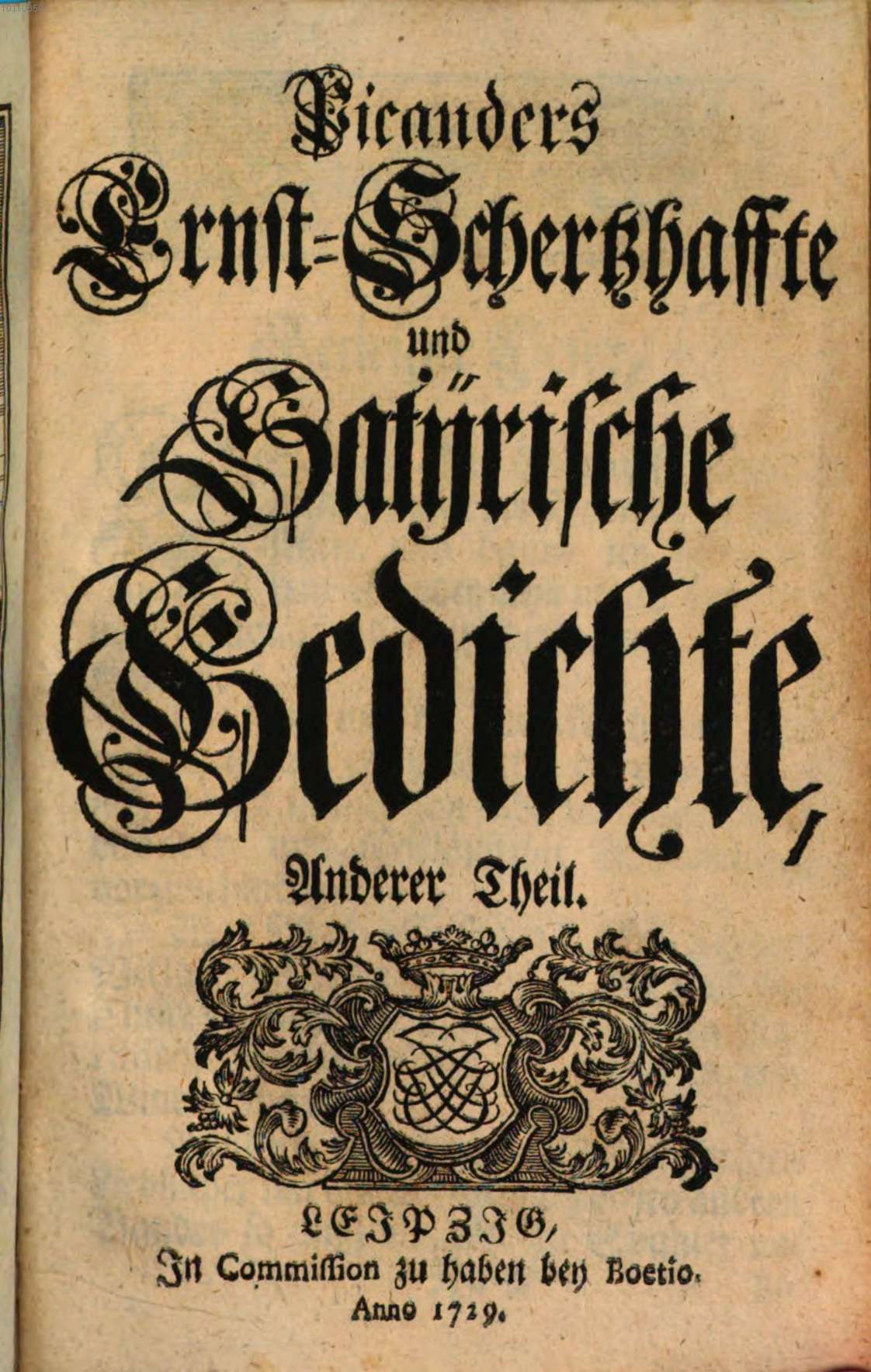
Below, finally, is the text of the St Matthew Passion as published in 1729, after the second performance, by Christian Friedrich Henrici — Picander.
Texts for the Passion music, according to the
evangelist Matthew, on Good Friday
during Vespers in the church of
St Thomas
Before the sermon
You can see there — on the second image, page 101 of the collection — that the opening chorus is entered as an ‘aria’: an aria of the Tochter Zion (Z) in conversation with the faithful (G). And as the heading shows, the music was interrupted by a sermon, an hour long, in which the preacher will no doubt have meditated on the Passion of Christ in much the same way and in comparable language. Perhaps he singled out a few words from the text and tested them from every side for meaningful connections; perhaps he dwelt on an image and tried to light it from every angle, surfing through the Bible as though it were one great hypertext. And when the sermon was over, the musical sermon set by Bach resumed, and Zion and the faithful took up the thread of their conversation again, circling around the mystery of the Passion of Christ — his suffering and his love. Their call to one another is to rise above the emotional reflex that would prevent the suffering and avert his death (Lasst ihn, haltet, bindet nicht) and to see it all in the light of eternity: this is the prelude to the wedding of the Lamb. His death gives us life. Da schlafen unsre Sünden ein.
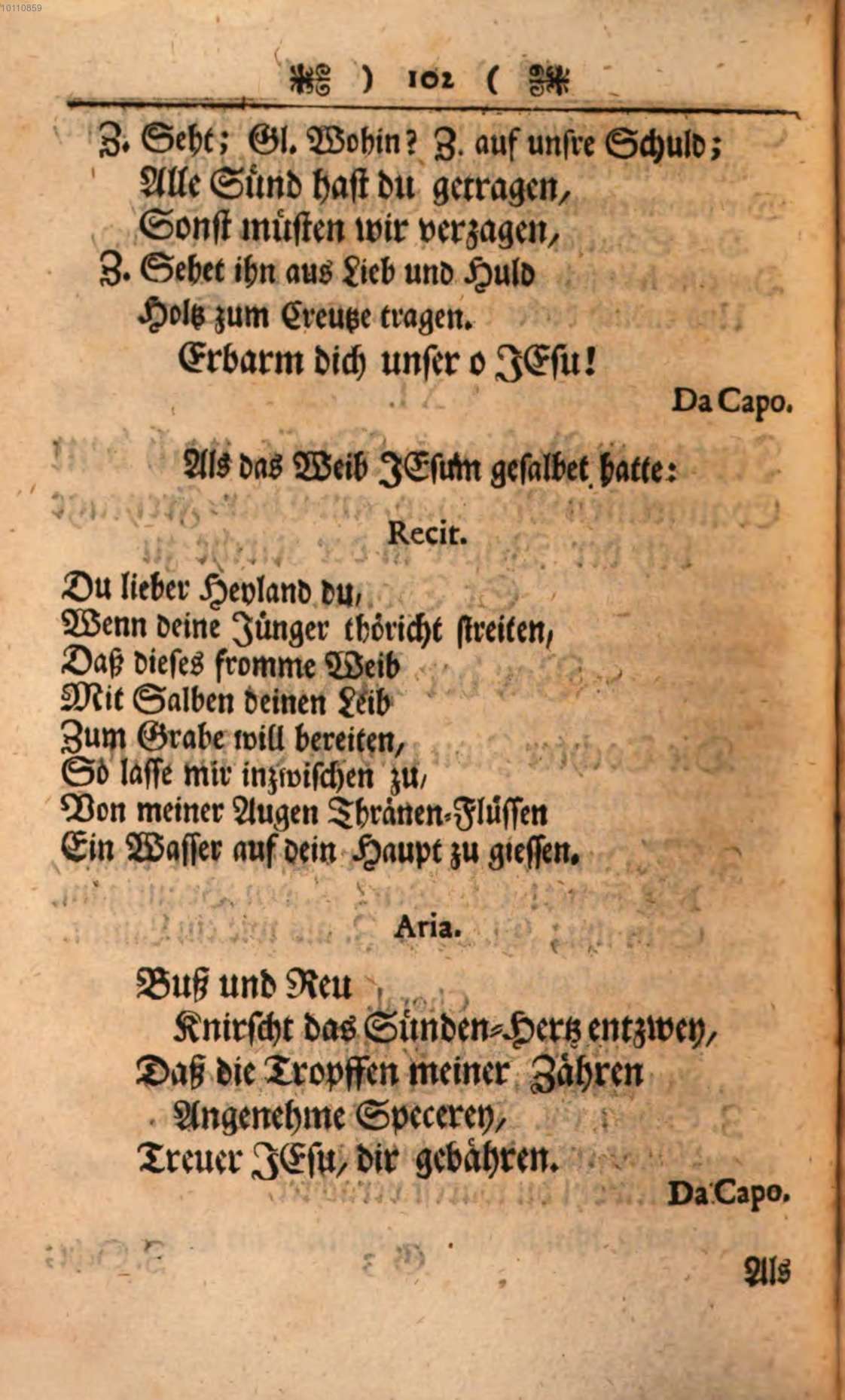
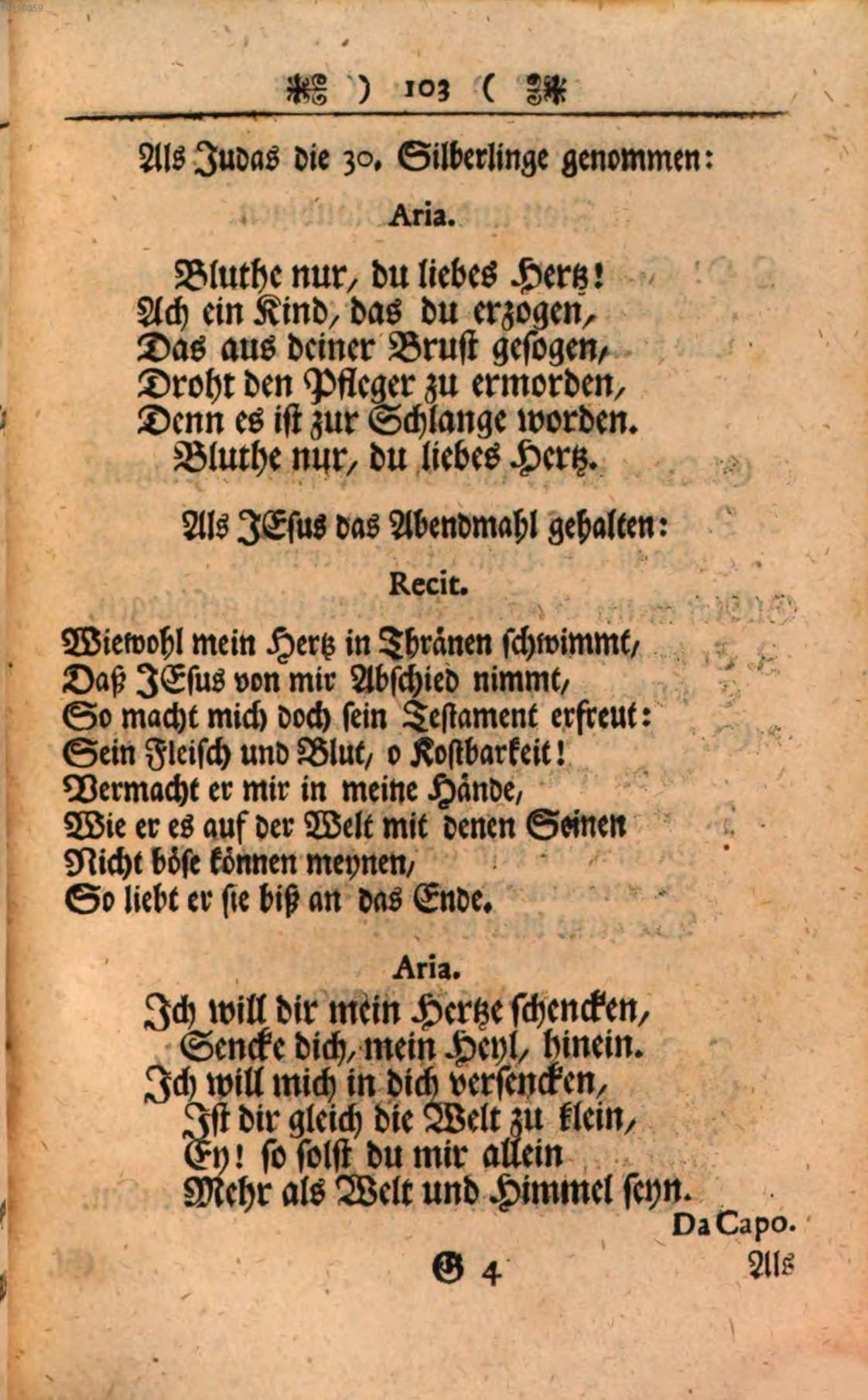
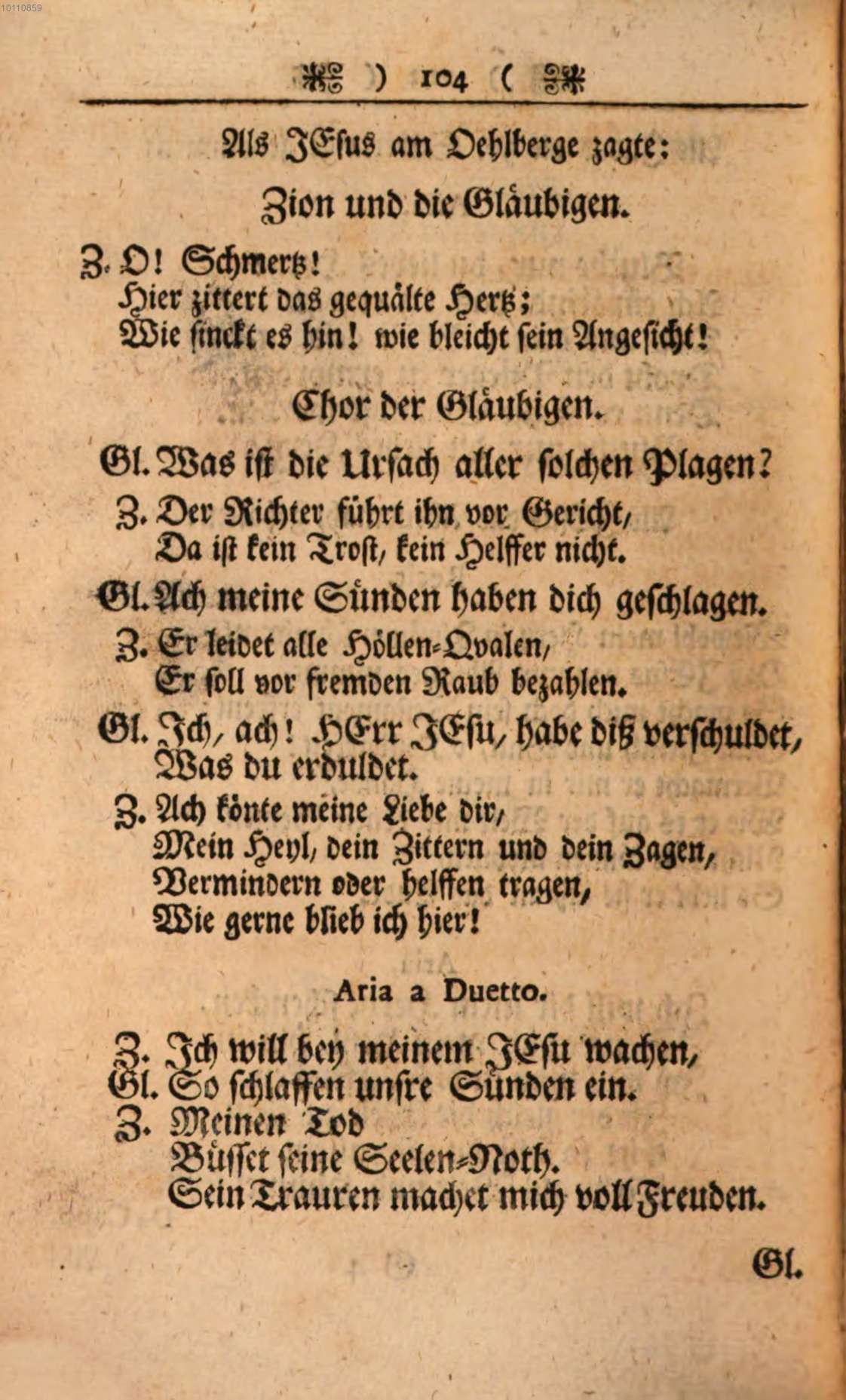
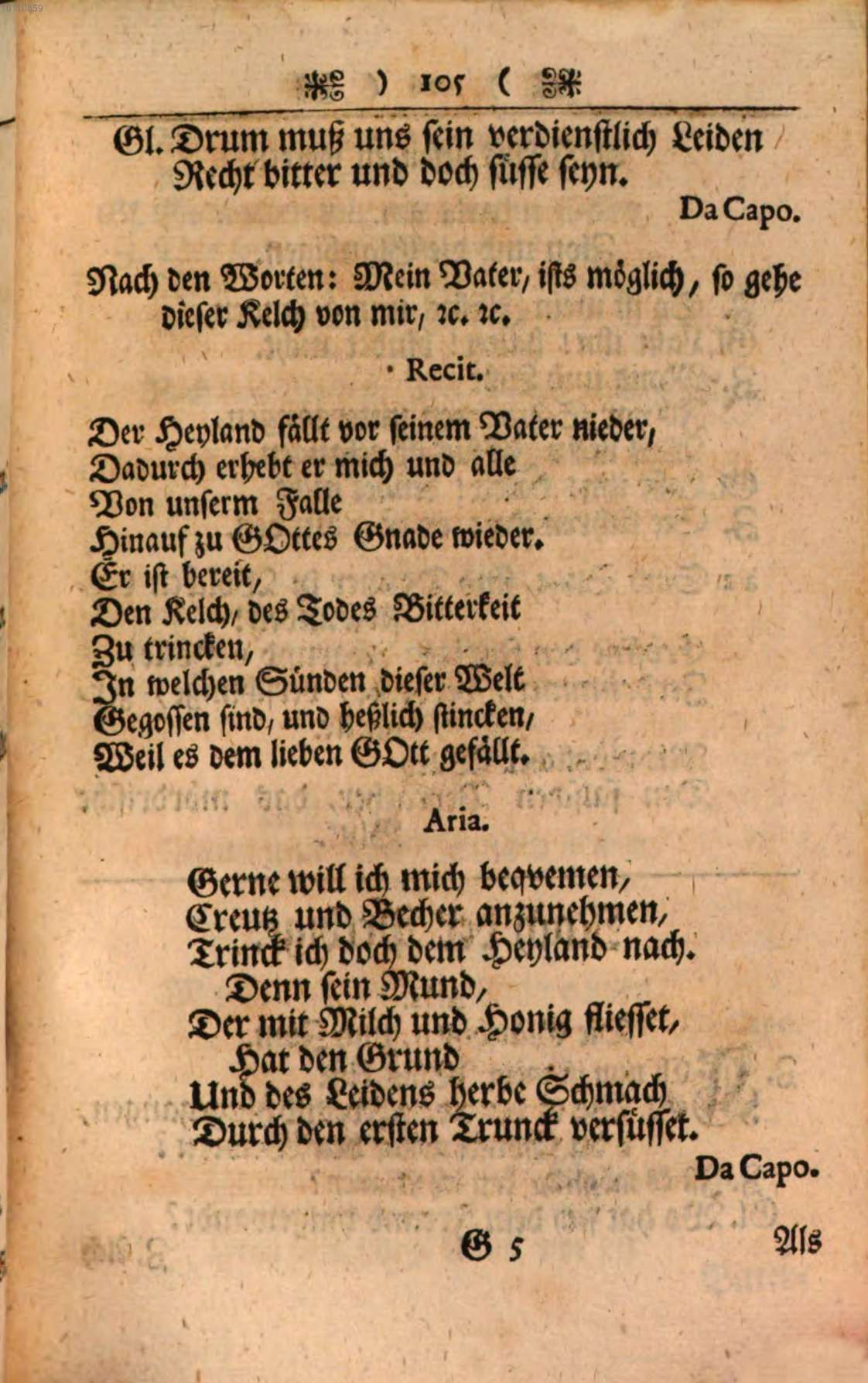
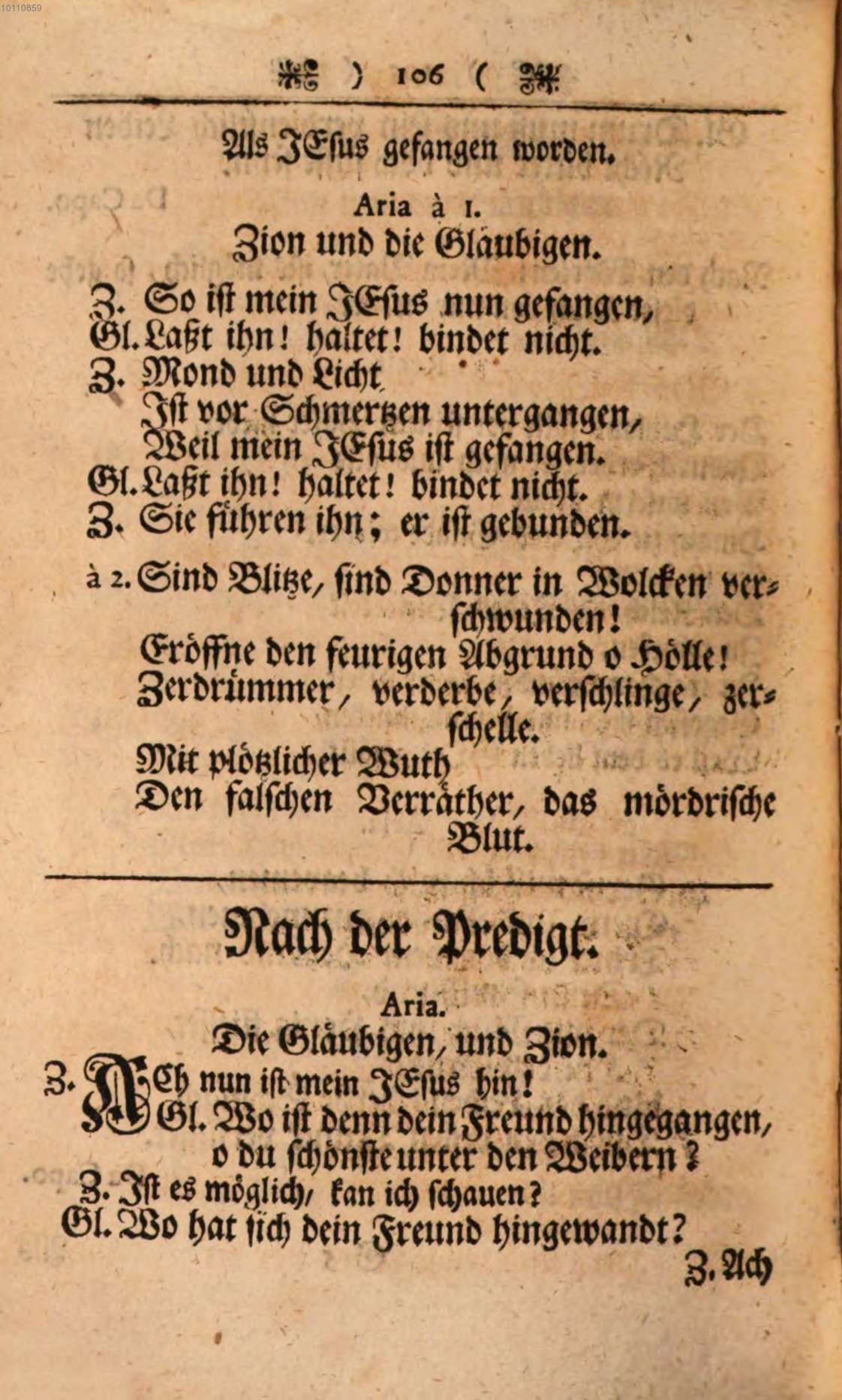
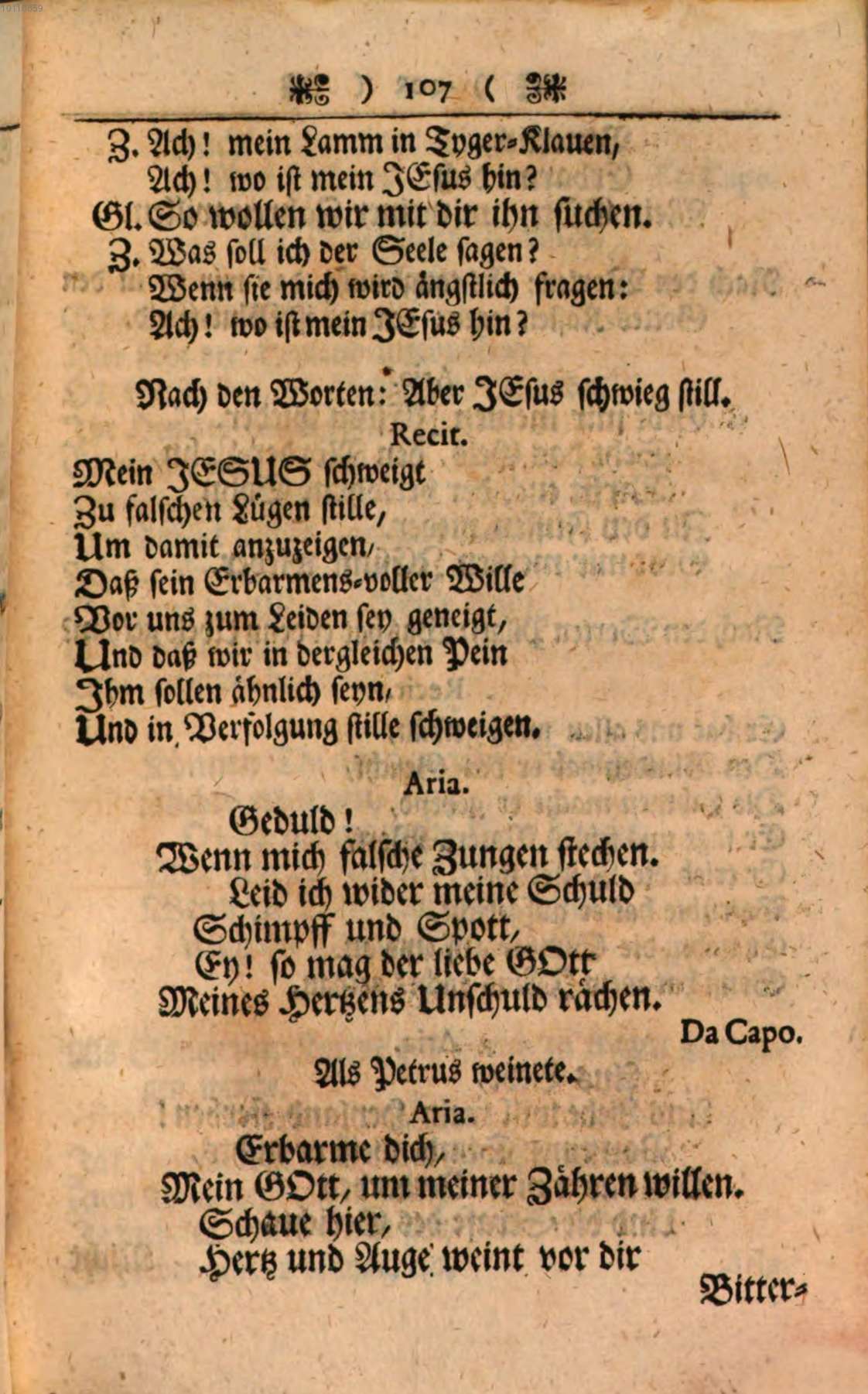
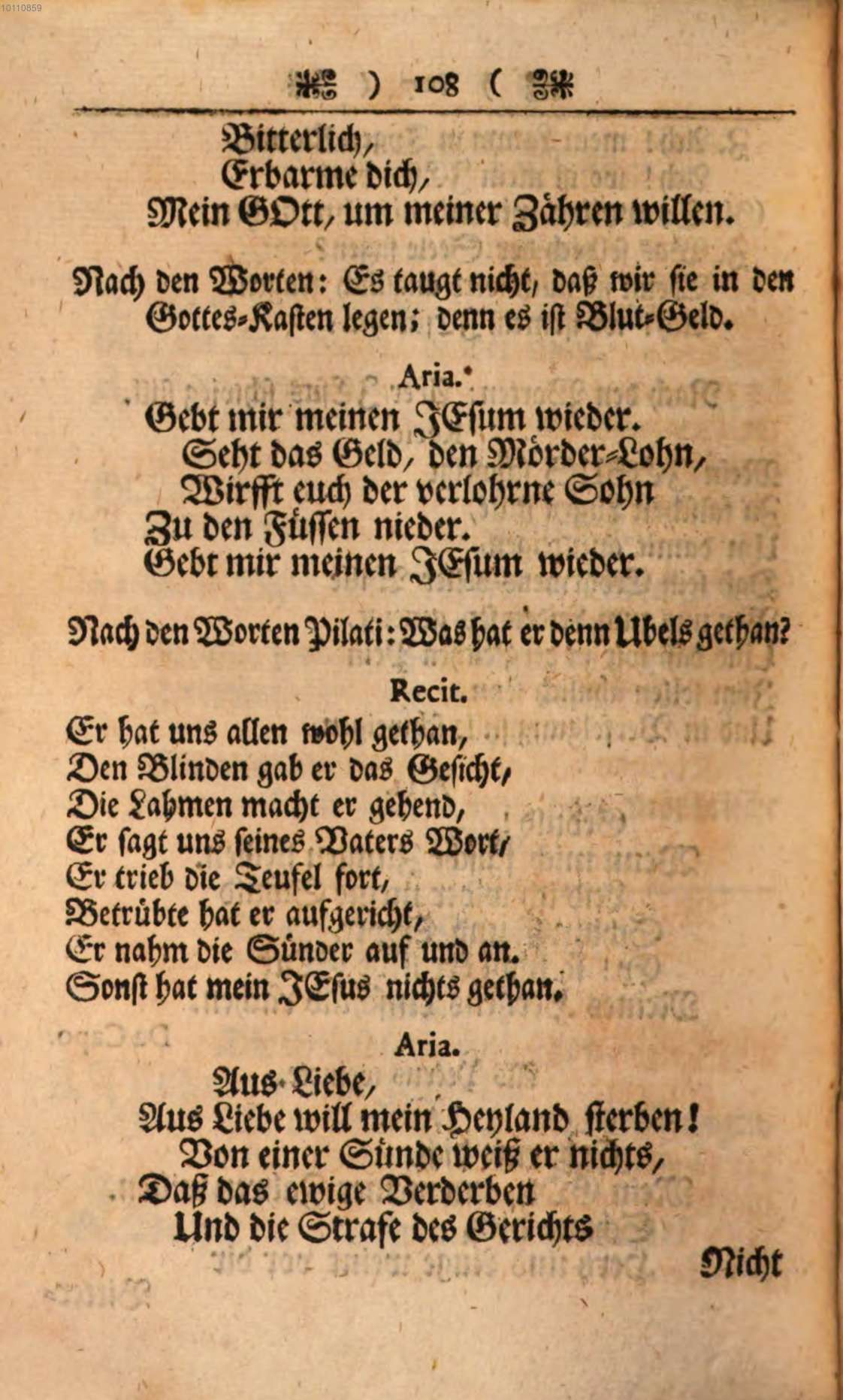
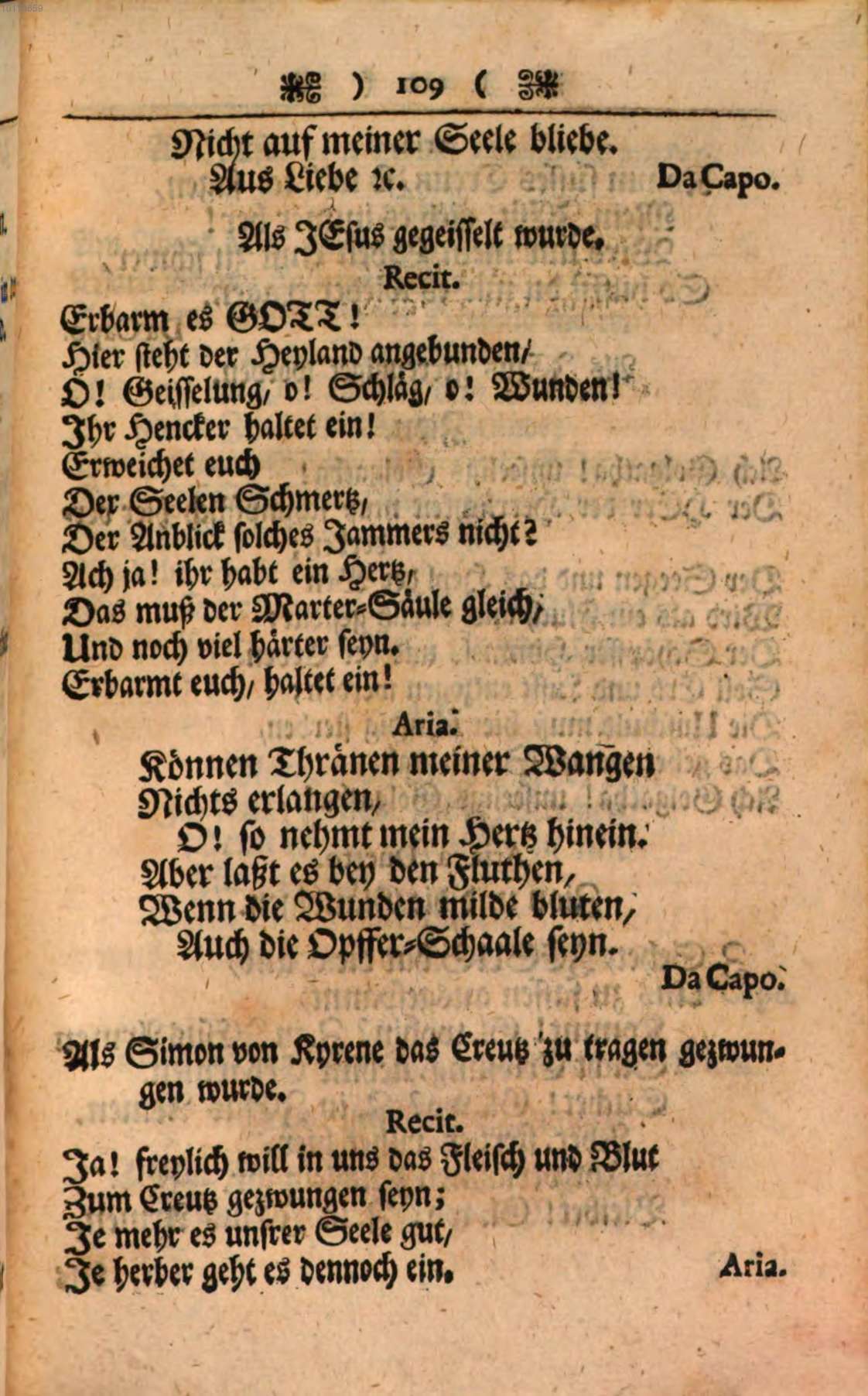
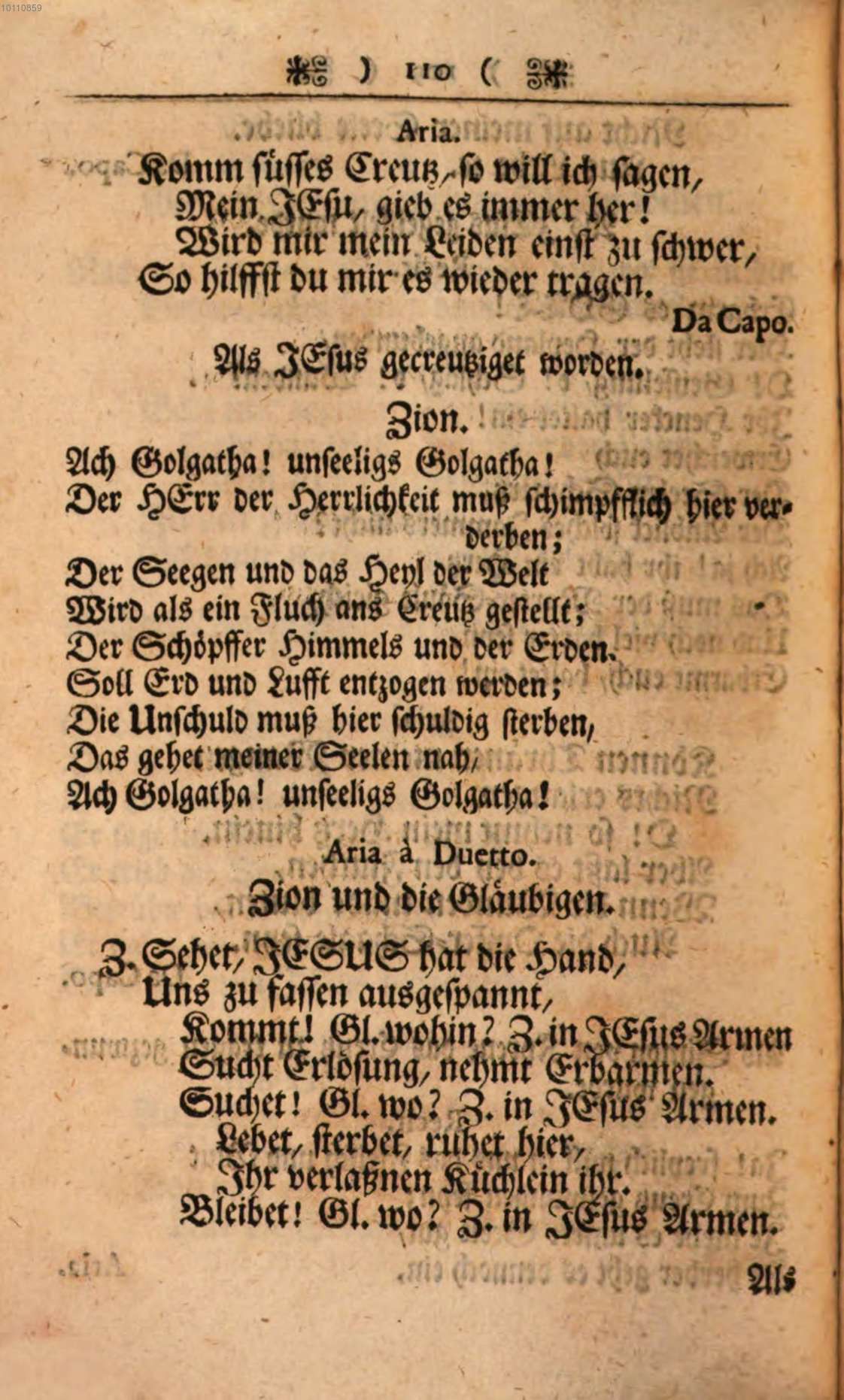
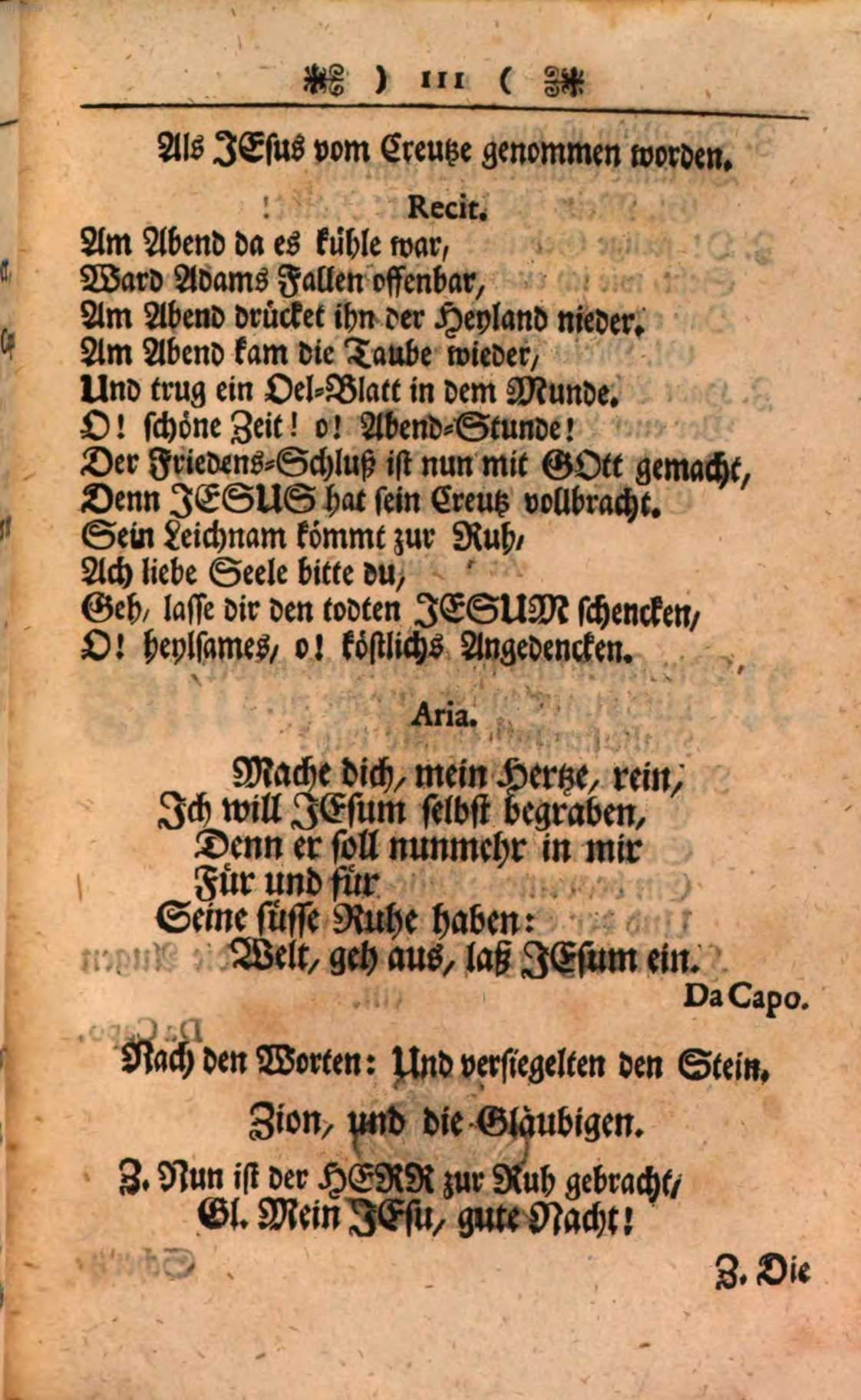
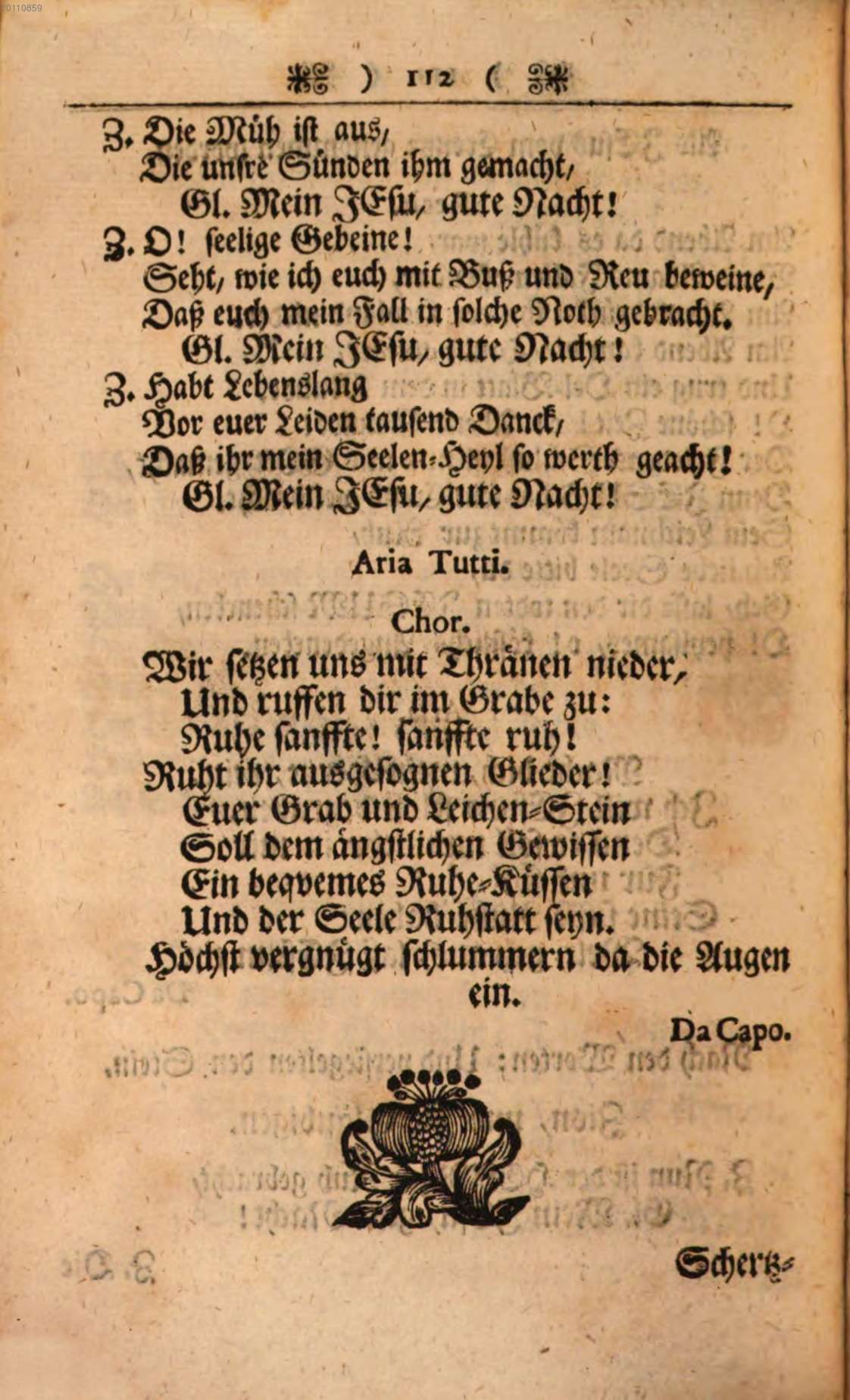
The complete German text with a Dutch translation is here.
14 March 2021, Dick Wursten
- This is Hebrew idiom: ‘children of Israel’, ‘daughters of Jerusalem’, ‘sons of Belial’. The genitive construction indicates close involvement. Zion is properly the name of the hill on which Jerusalem is built, and in the Old Testament it becomes a term of endearment for the holy city — and so, through that construction, for its inhabitants.↩
- I once wrote a separate essay on the allegorical exposition of the Song of Songs; you can read it here (in Dutch).↩