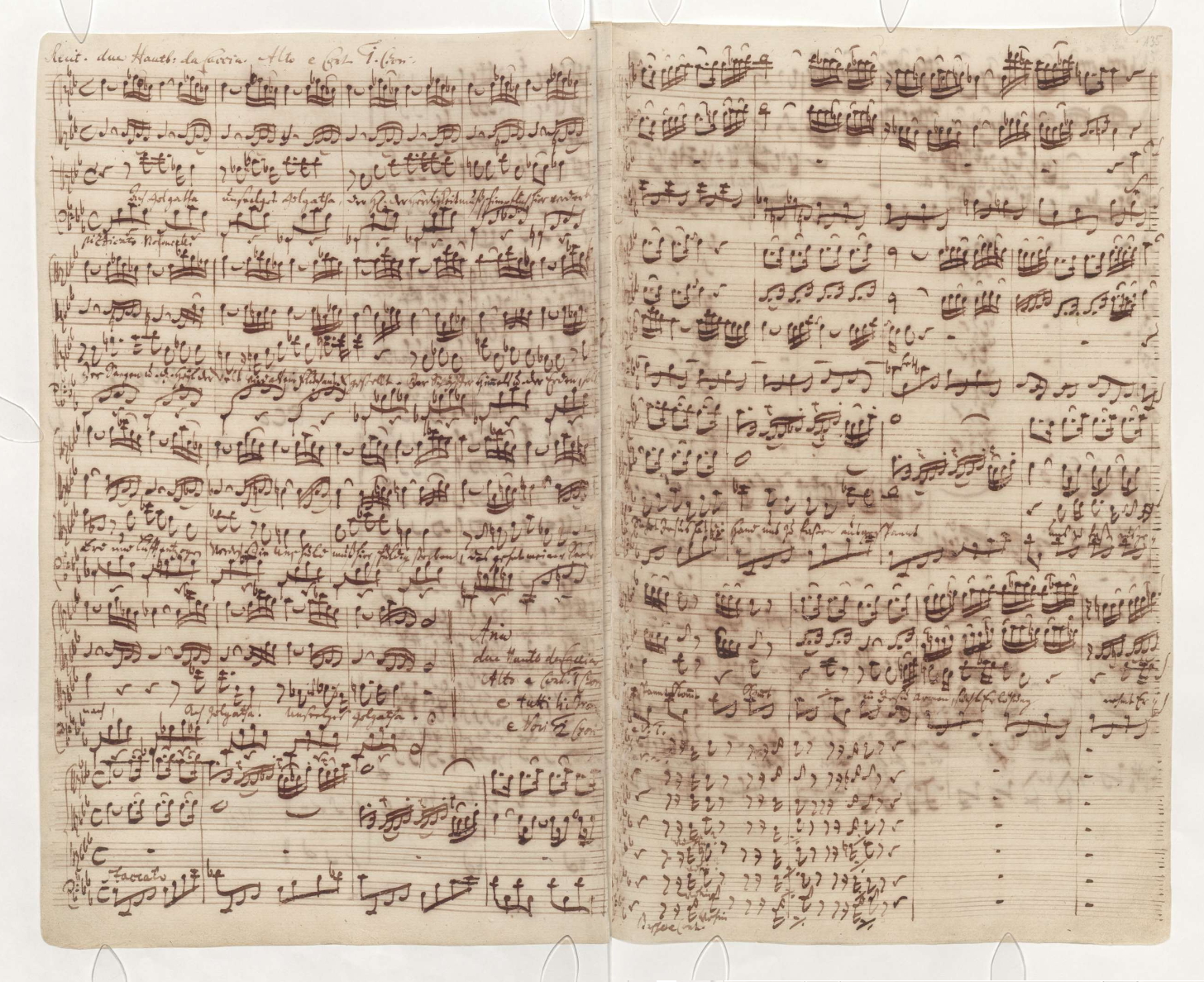
Sehet, Jesus hat die Hand…
Ach Golgatha
And at last the moment has come. The via dolorosa leads Jesus to Golgotha. The approach was long, and the crucifixion itself is told without elaboration (gospel recitative, no. 58). Then the action is halted. It is time to consider what is actually happening. In an expressive recitative the singer voices his horror at the atrocity taking place: it is an accursed hill (Ach Golgatha, unseliges Golgatha, no. 59). ‘Cursed is everyone who hangs on a tree’, says the book of the Law. Der Segen und das Heil der Welt wird als ein Fluch ans Kreuz gestellt – the blessing and salvation of the world is set upon the cross as a curse. Yes, innocence is being murdered here. And yet at the same time this is a blessed hill, the preacher tells us. For to anyone who regards the event with the eyes of faith, the innocent one is dying here for the guilt of the world. ‘The chastisement of our peace was upon him’ (Isaiah 53). Even so it cuts the singer to the heart. Das gehet meiner Seele nah; Ach Golgatha, unseliges Golgatha…
The gesture: blessing and embrace
And then follows one of the shortest arias in the St Matthew Passion (no. 60, Sehet, Jesus hat die Hand…). The beholder is called to dwell on the moment when Christ’s hands are spread out to be nailed to the crossbeam. And even in this moment of pain and passivity the beholder finds meaning, and even consolation. This is the fruit of many centuries of meditation on ‘the suffering Christ’, in which the effort was made to give every detail a deep and salutary sense.1 The beholder sees a gesture in it: Christ spreads his arms to bless us; indeed, he stretches out his hands to take hold of us, to embrace us. To us this is – once again – a strange association, not to say a misplaced or perverse one; but to Bach and to the churchgoers of Leipzig it was an entirely ordinary one, familiar from many a sermon, devotional poem or meditative text.2
Picander and Müller side by side
This time it really does look as though Picander had a book of meditations open on his desk when he wrote the text of this aria: the eighth Passion sermon of Heinrich Müller, from his Evangelischer Hertzens-Spiegel.3 His train of thought reflects a passage from that sermon very precisely (the texts are below). Müller’s meditative Passion sermons were extremely popular from their first publication in the seventeenth century until the early nineteenth – which says something about how well they communicated. The nine Passion sermons were an appendix to his collected meditations on the gospel and epistle readings of the church year. They are intimate texts, descriptive and contemplative at once, pausing at every detail in search of meaning. Edifying reading, then, for believers who wanted rather more than merely going to church – and expressly intended to ‘write the image of Christ in their heart’. Hence the title. And if Picander did not own a copy himself, he could have borrowed one from Bach, who owned the complete series of Müller’s sermons in five volumes. Bach may even have suggested to Picander that he use these Passionspredigten for the text of the St Matthew Passion. Remarkably often one can lay a passage from one of those sermons beside the free (madrigalian) texts of the arias and dialogues in the Passion. That is what I do here: first the aria, then a fragment from the sermon. If you want to read it in full, the whole sermon is reproduced at the foot of this page. Read and compare. I think the correspondence will strike you too.
No. 60, Aria (alto) and chorus – Oboe I/II, Oboe da caccia I/II, Violino I/II, Viola, Organo, Continuo
Sehet, Jesus hat die Hand,
Uns zu fassen, ausgespannt,
Kommt, – wohin? – in Jesus Armen.
Sucht Erlösung, nehmt Erbarmen,
Suchet, – wo? – in Jesus Armen.
Lebet, sterbet, ruhet hier,
Ihr verlaßnen Küchlein ihr.
Bleibet, – wo? – in Jesus Armen.
See, Jesus has stretched out his hand
to take hold of us.
Come – where to? – into Jesus’ arms.
Seek redemption, receive mercy;
seek – where? – in Jesus’ arms.
Live, die, rest here,
you forsaken little chicks.
Remain – where? – in Jesus’ arms.
Heinrich Müller, eighth Passion sermon – an abridged passage.
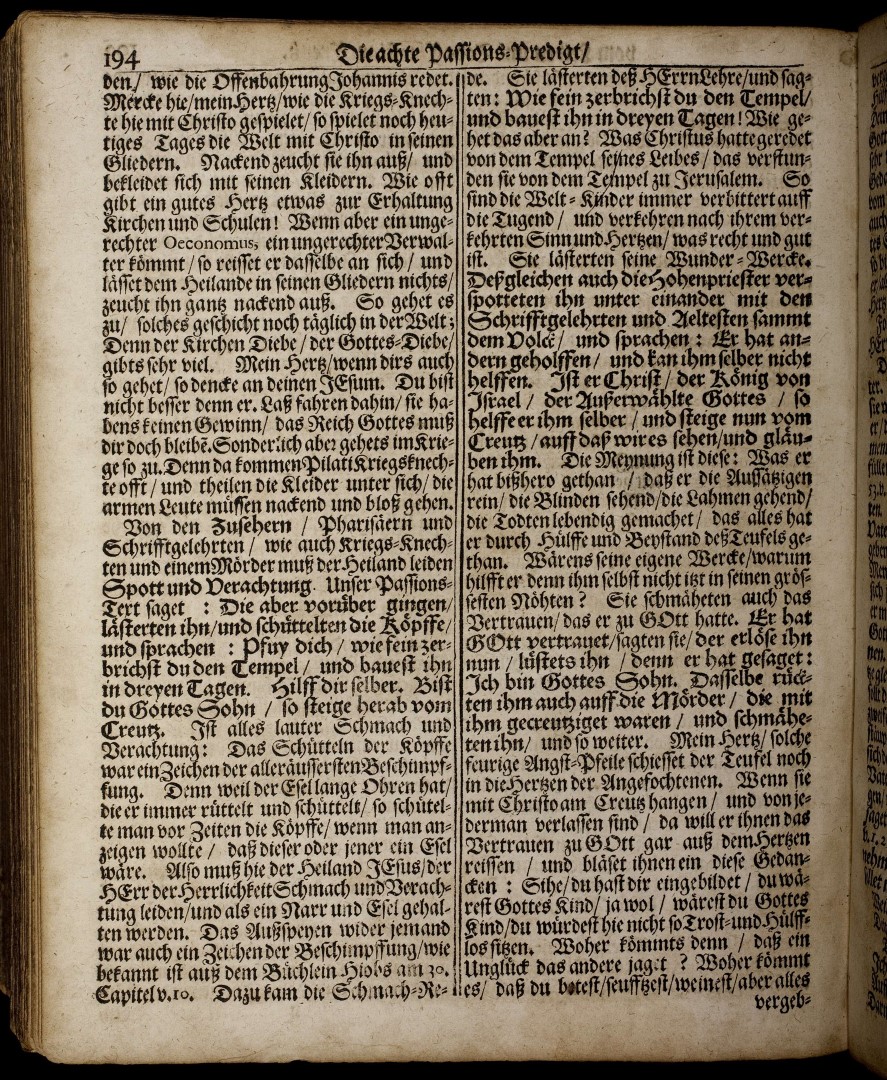
Tritt hinzu, mein Hertz, und schaue deinen Jesum an, wie er am Creutz hanget. Seine Hände hat er ausgespannet, als der rechte Hohepriester, dich mit beyden Händen zu segnen. Er hat sie ausgespannet, dich damit zu umpfahen … Liebstes Hertz, gib du dich hinein in die ausgespannete Arme deines Jesu, und sage mit Augustino: Inter brachia Salvatoris mei & vivere & mori cupio. Aus Jesu Händen soll und kan mich niemand reissen.
Draw near, my heart, and look upon your Jesus, how he hangs on the cross. He has spread out his hands, as the true High Priest, to bless you with both hands. He has spread them out to embrace you … Dearest heart, give yourself over into the outstretched arms of your Jesus, and say with Augustine: ‘In the arms of my Saviour I long both to live and to die.’ No one shall or can tear me out of Jesus’ hands.
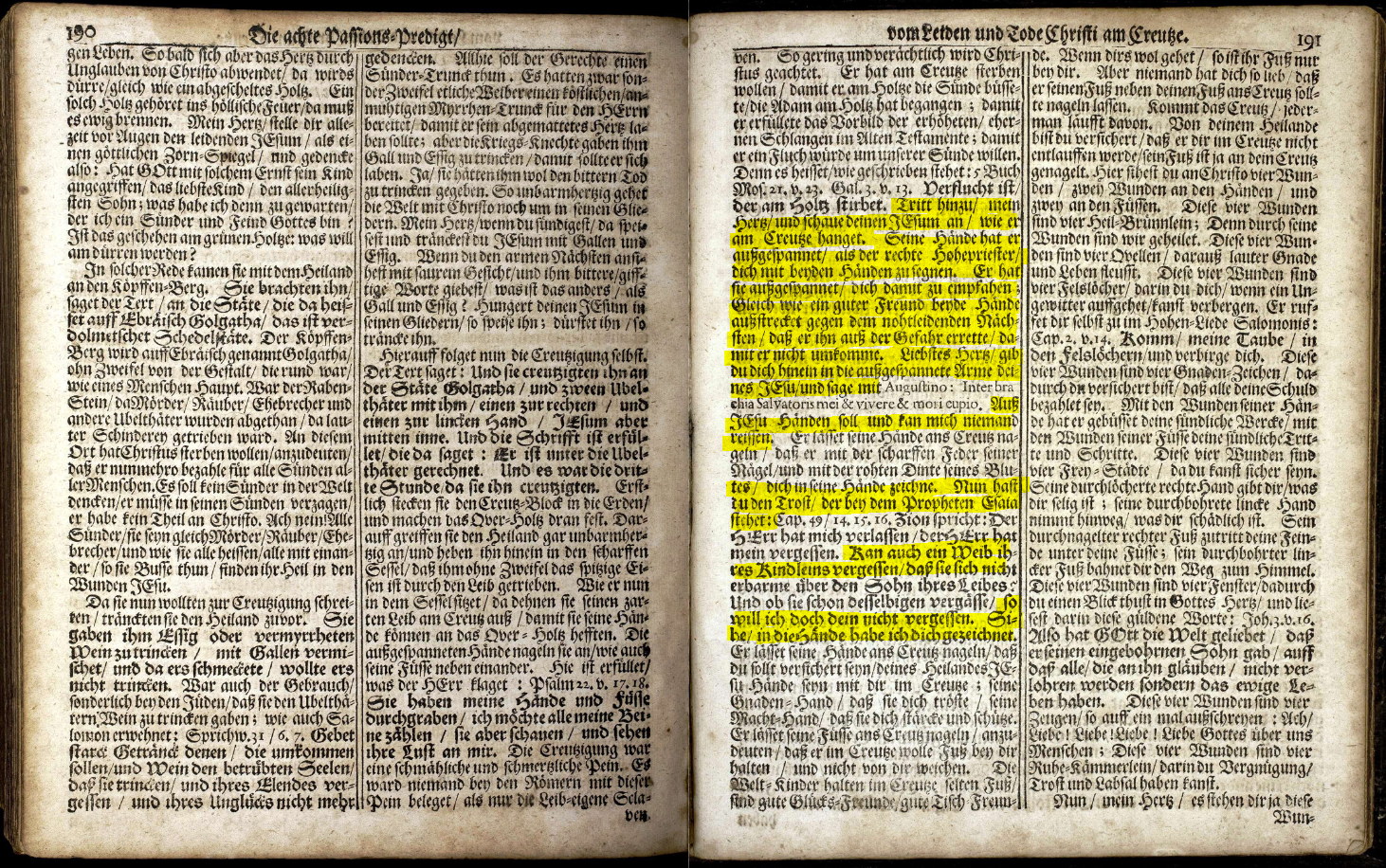
The contemplation of Jesus hanging on the cross with outstretched arms is seldom absent from the Passion sermons of Bach’s day. The association with the priestly gesture of blessing matters particularly here: it is the first thing Müller mentions.4 What is striking, though, is that this element – atonement through satisfaction – is effectively absent in Picander. Picander focuses on the emotional and immediate bond between the believer and Jesus, as though it were a private one. In his arms, so runs the message, one finds protection, safety, shelter – in life and in death alike. All of this is summed up in Müller by an equally beloved quotation from Augustine, which resounds strongly in Picander as well: Inter brachia Salvatoris mei & vivere & mori cupio (‘in the arms of my Saviour I long both to live and to die’). ‘Live, die, rest here…’, writes Picander, unerringly.5
The forsaken chicks
The unexpected introduction of the image of the ‘forsaken little chicks’ has its logic in two things. First, the image has already been evoked in Matthew’s own narrative: in the words of Jesus to the weeping daughters of Jerusalem, he says he would like nothing better than to gather them under his wings, as a mother hen gathers her frightened chicks (Matthew 23:37). And second, a little further on in his meditation on the merciful embrace, Müller refers to the image of God as a mother who has compassion on her children and will never abandon them, invoking the prophecy of Isaiah 49:14-16. Beyond that, the reference is common property, a topos of Passion meditation.6
Music
Enough talk: time to listen to the aria (arioso, dialogue). Oboes, of course – oboes da caccia, among them Marcel Ponseele – over an underlying string sonority. Straight to the heart.
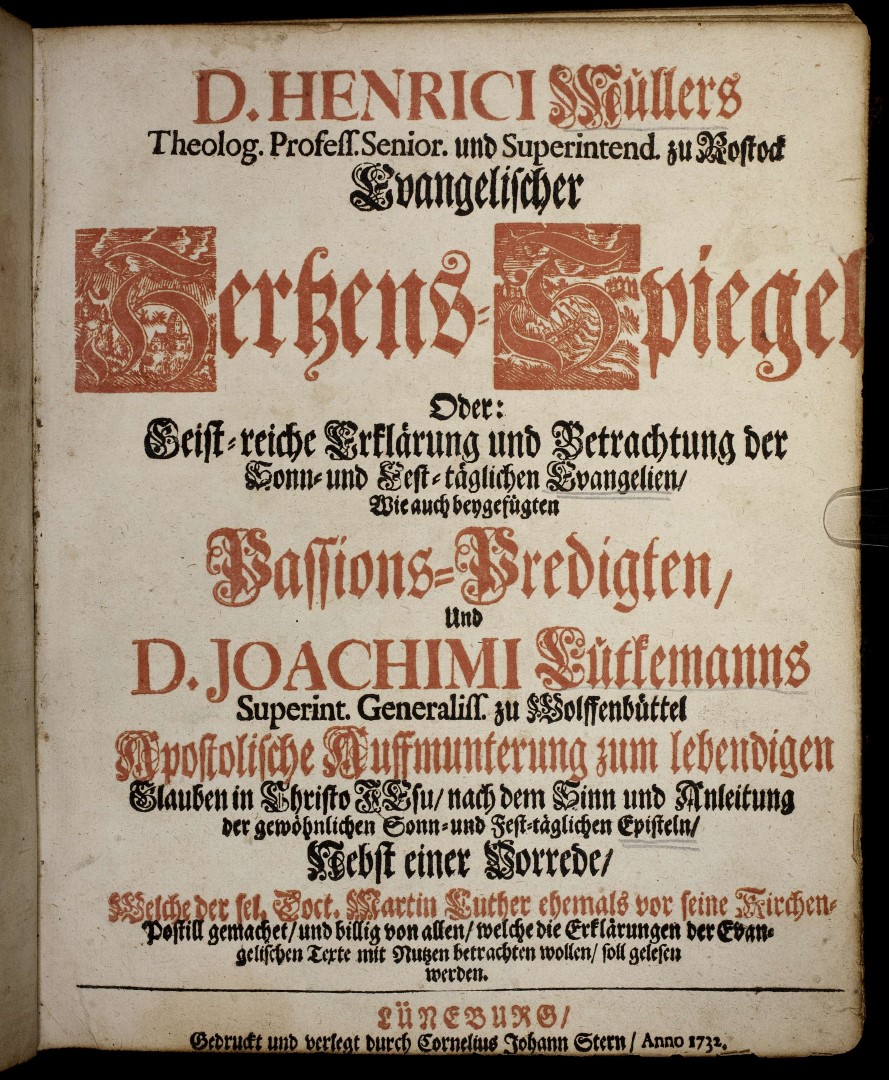
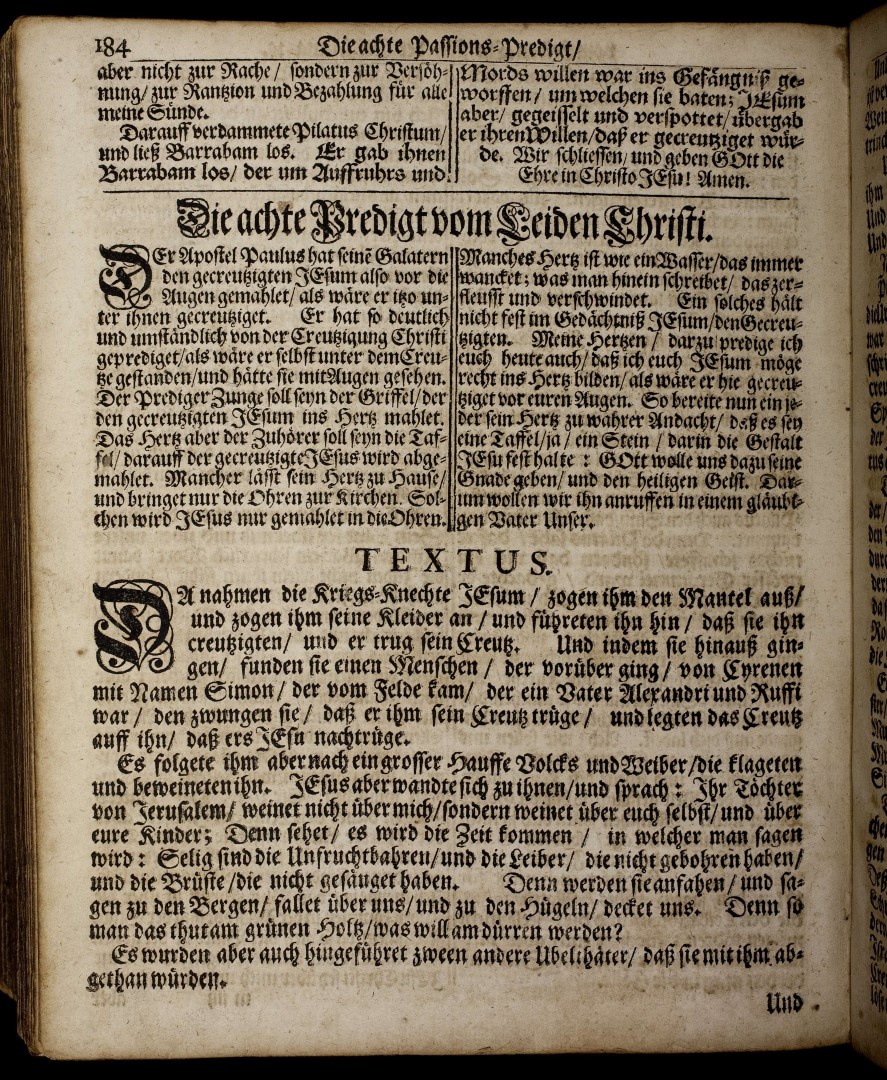
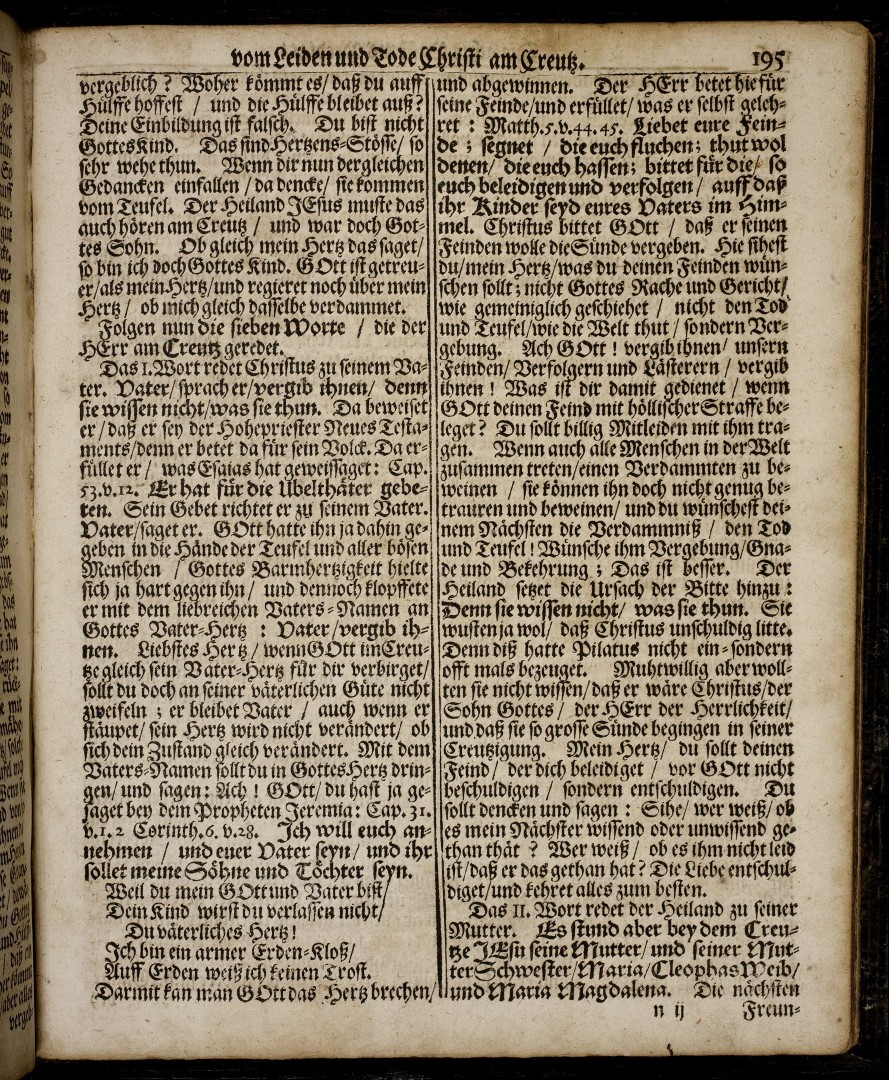
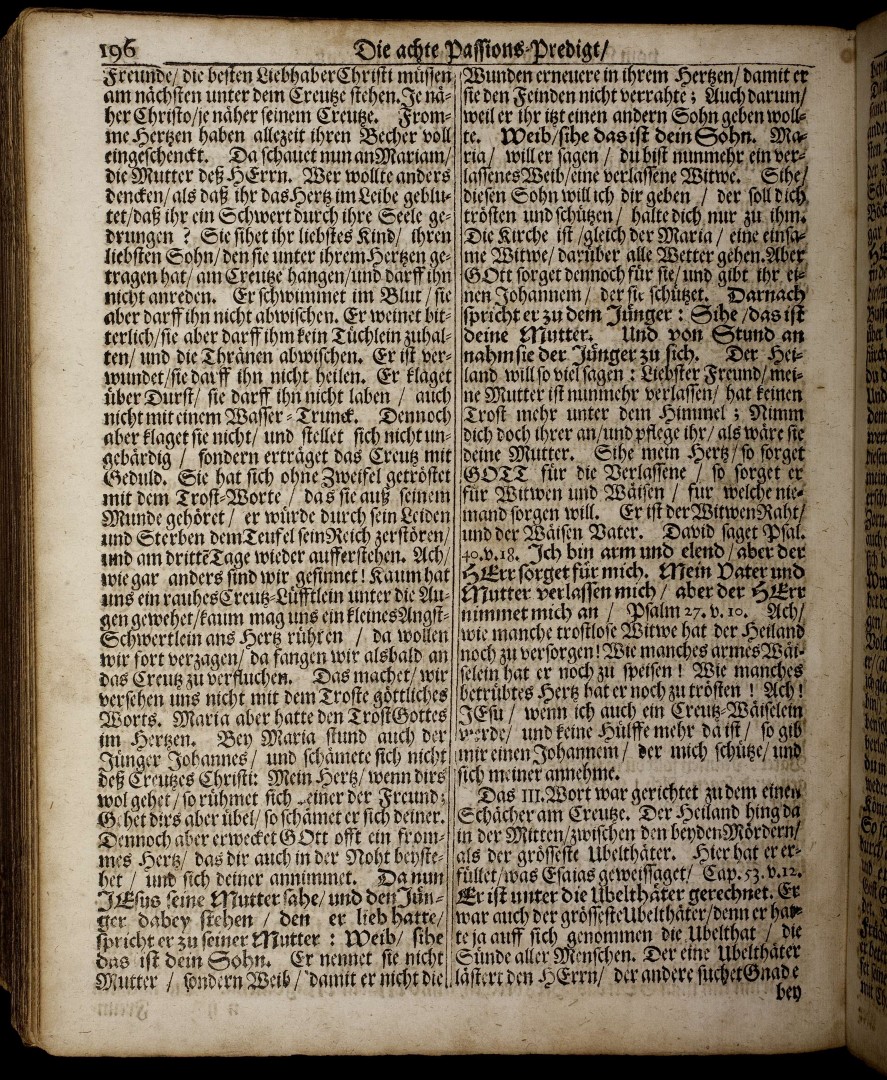
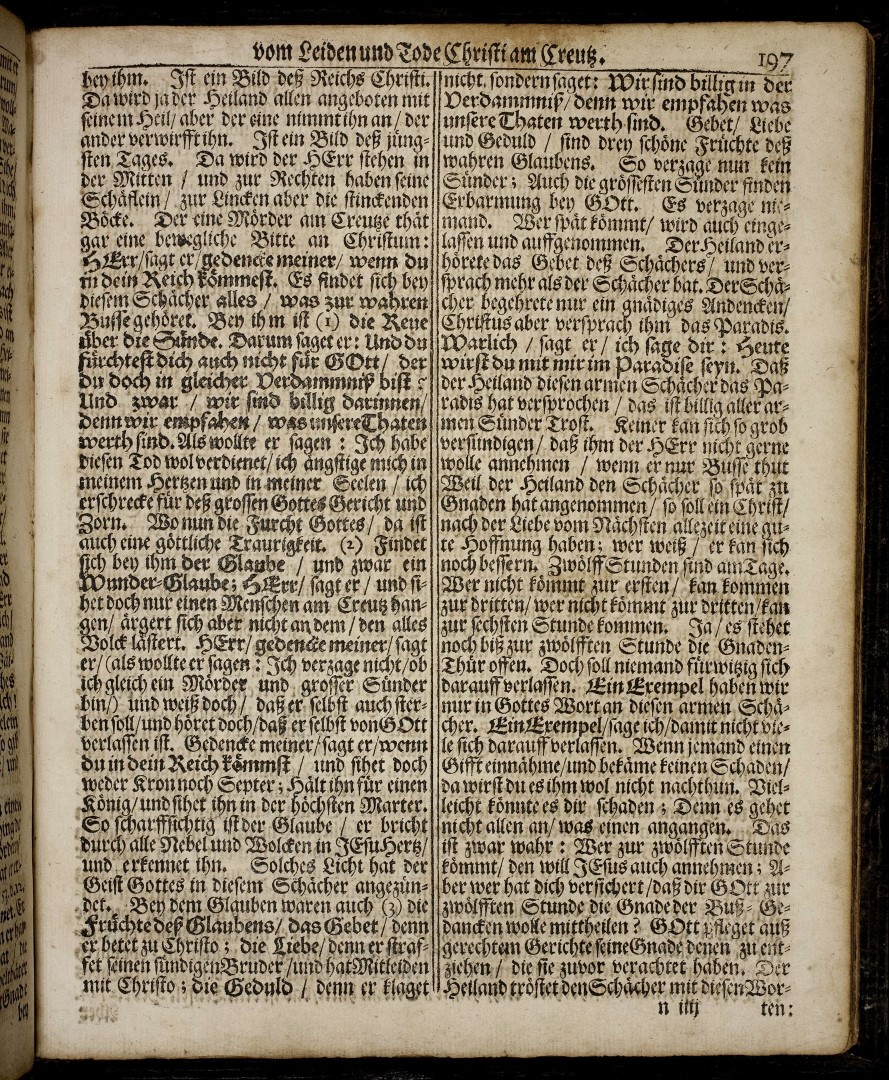
The eighth Passion sermon in facsimile
For those who would like to read it, here is the whole of Heinrich Müller’s eighth Passion sermon: twenty pages, of which the first four contain the gospel text and may be skipped. The meditation begins on page 187. Click an image to open it full size.
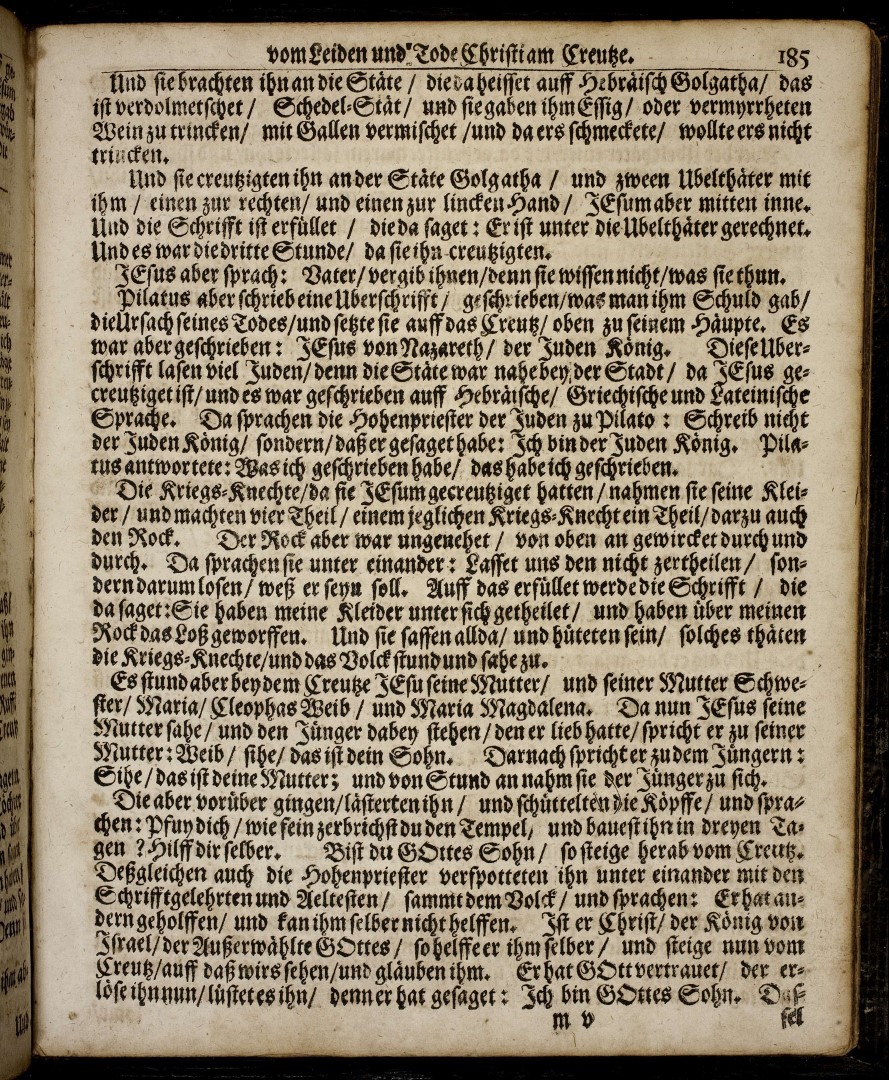
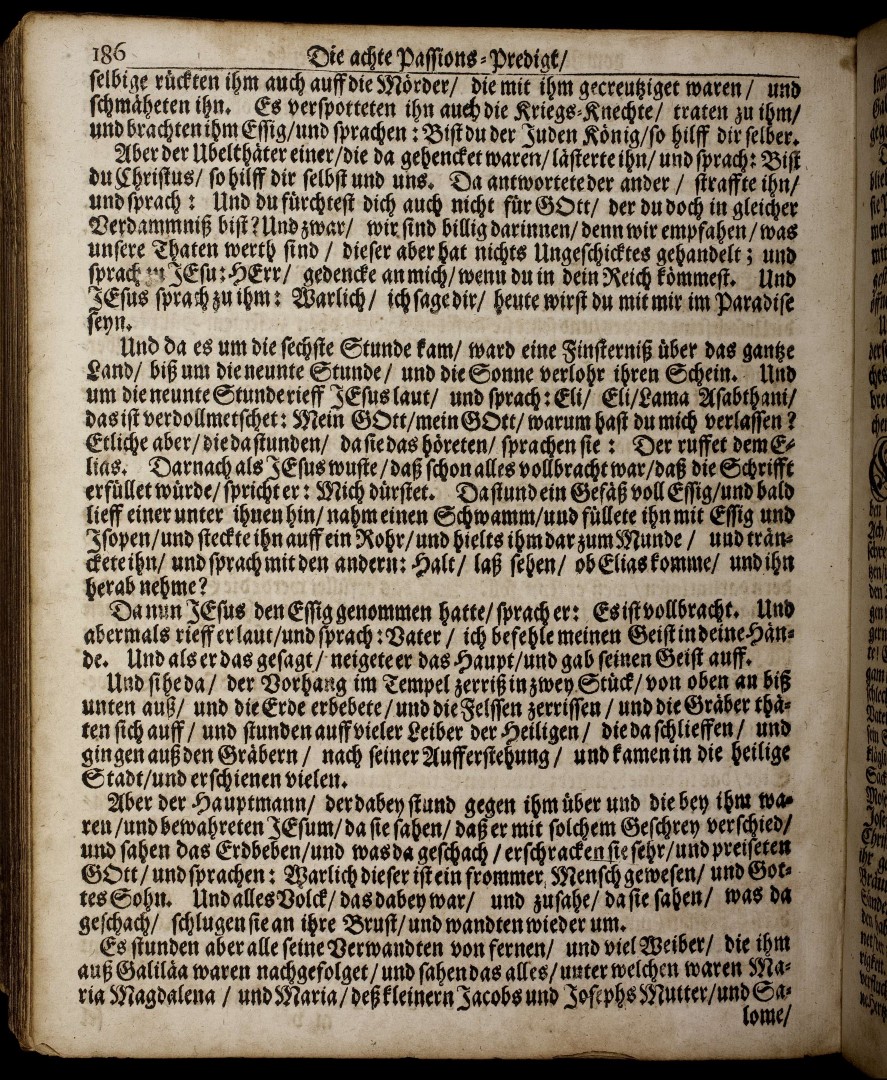
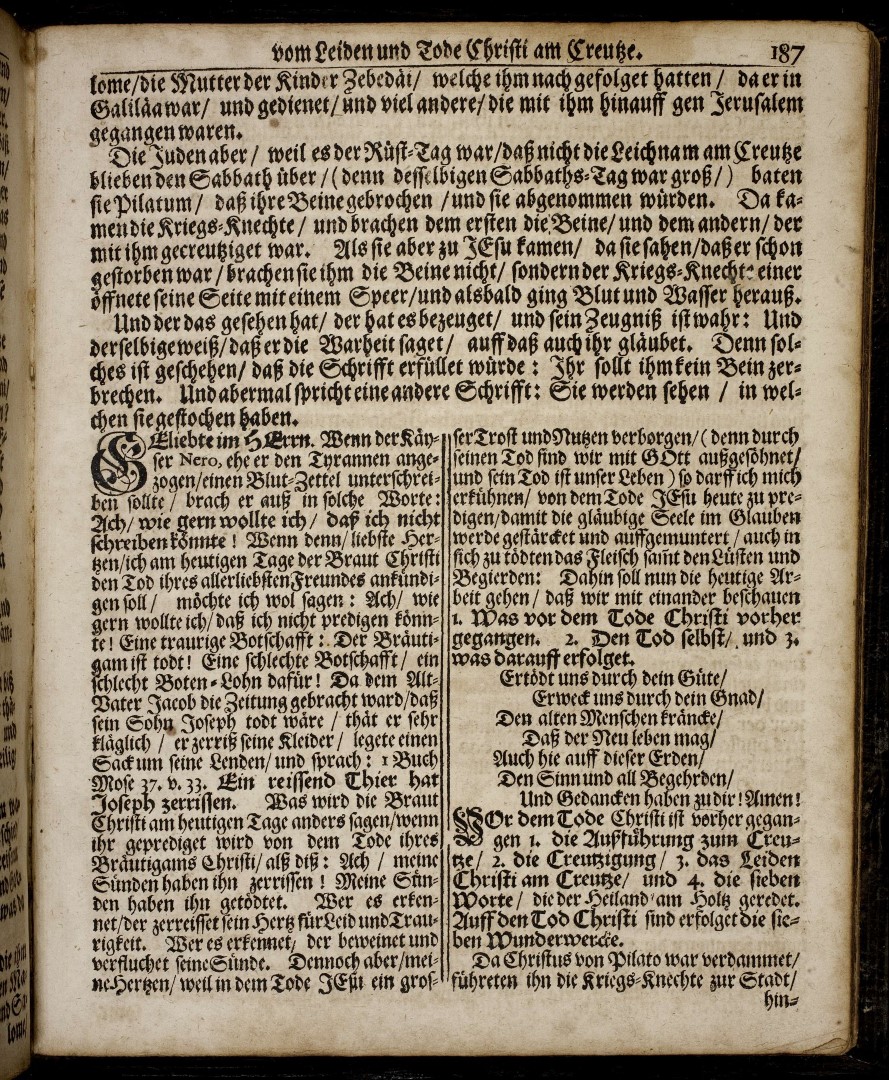
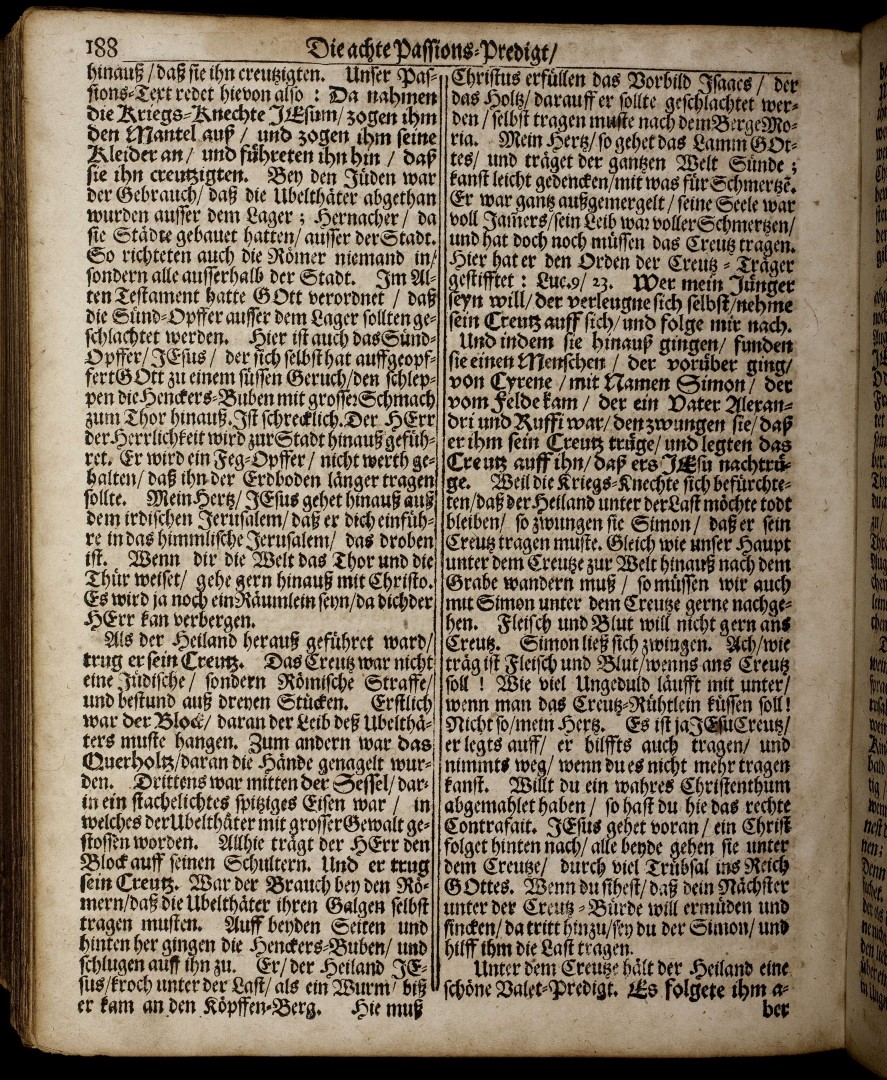
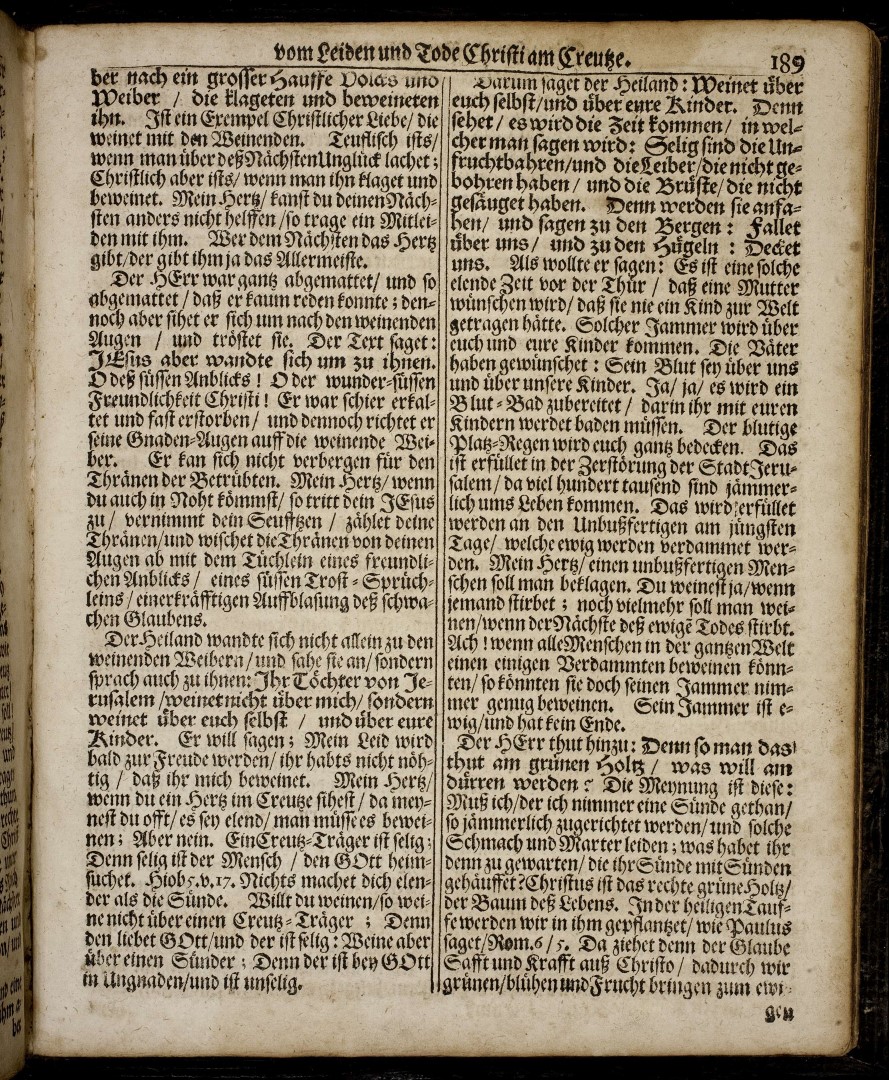
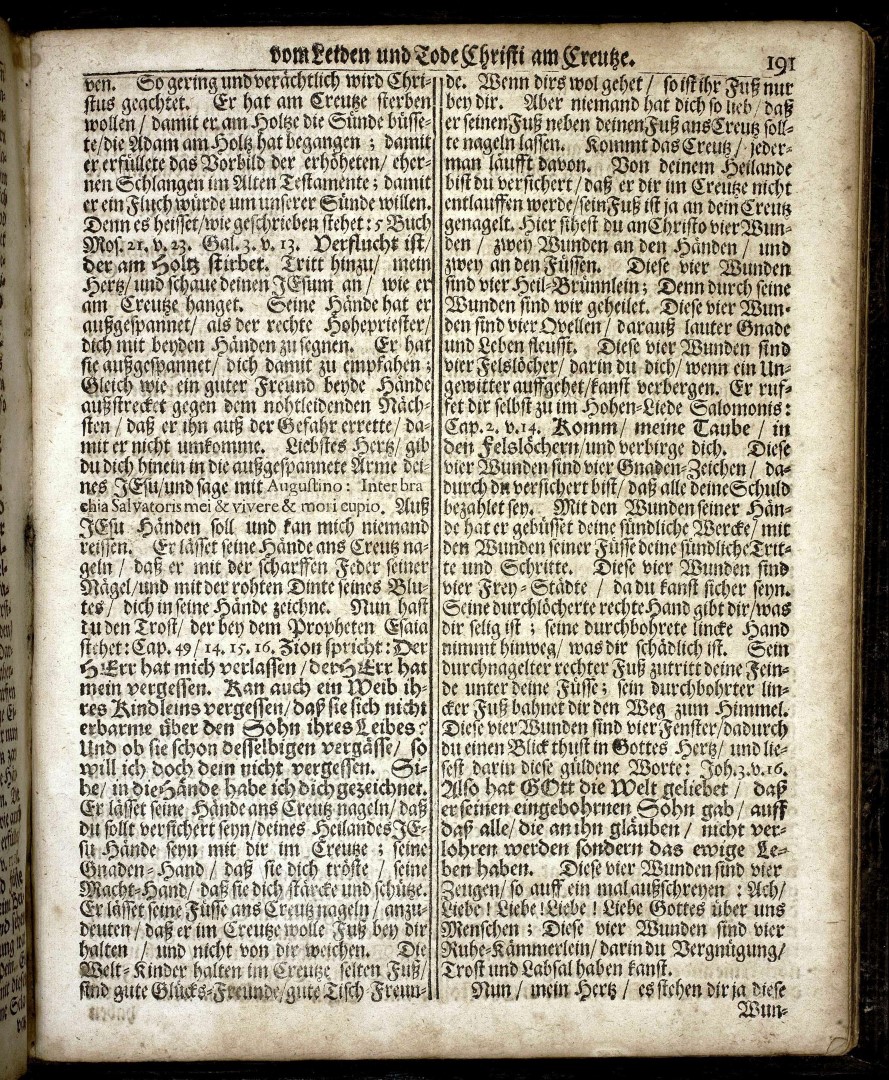
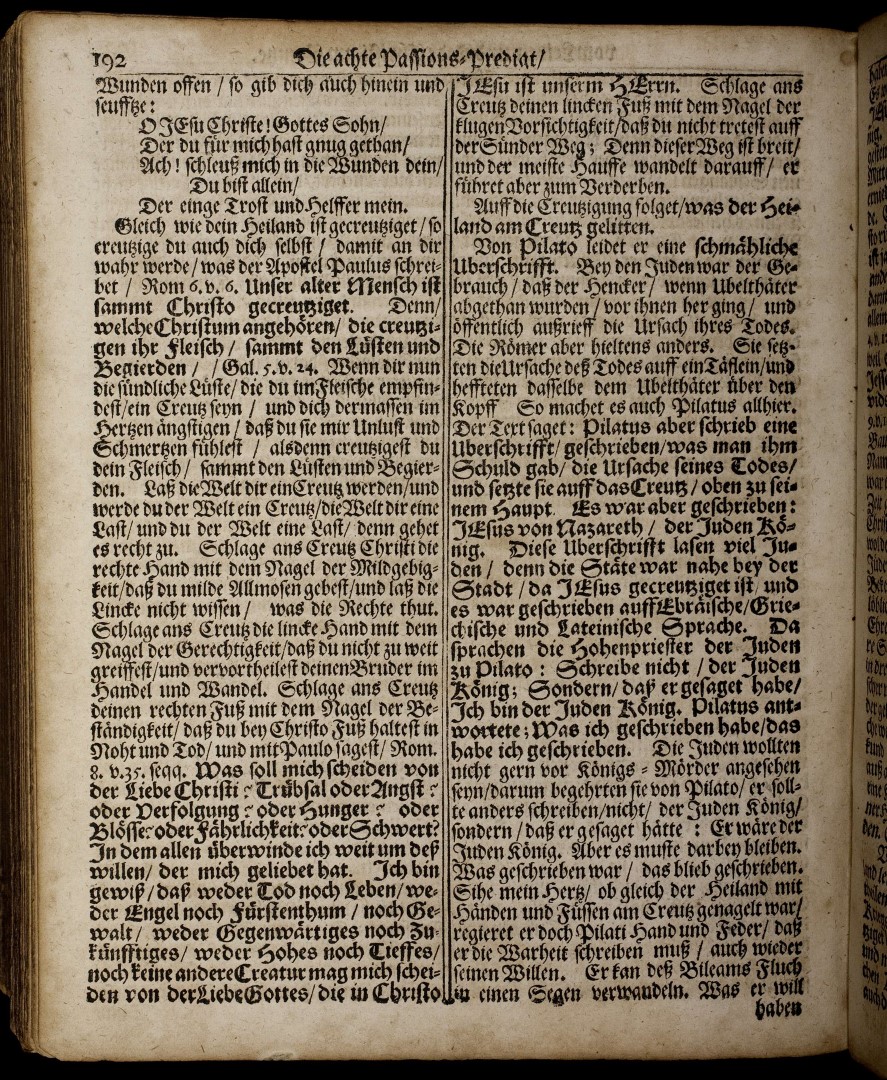
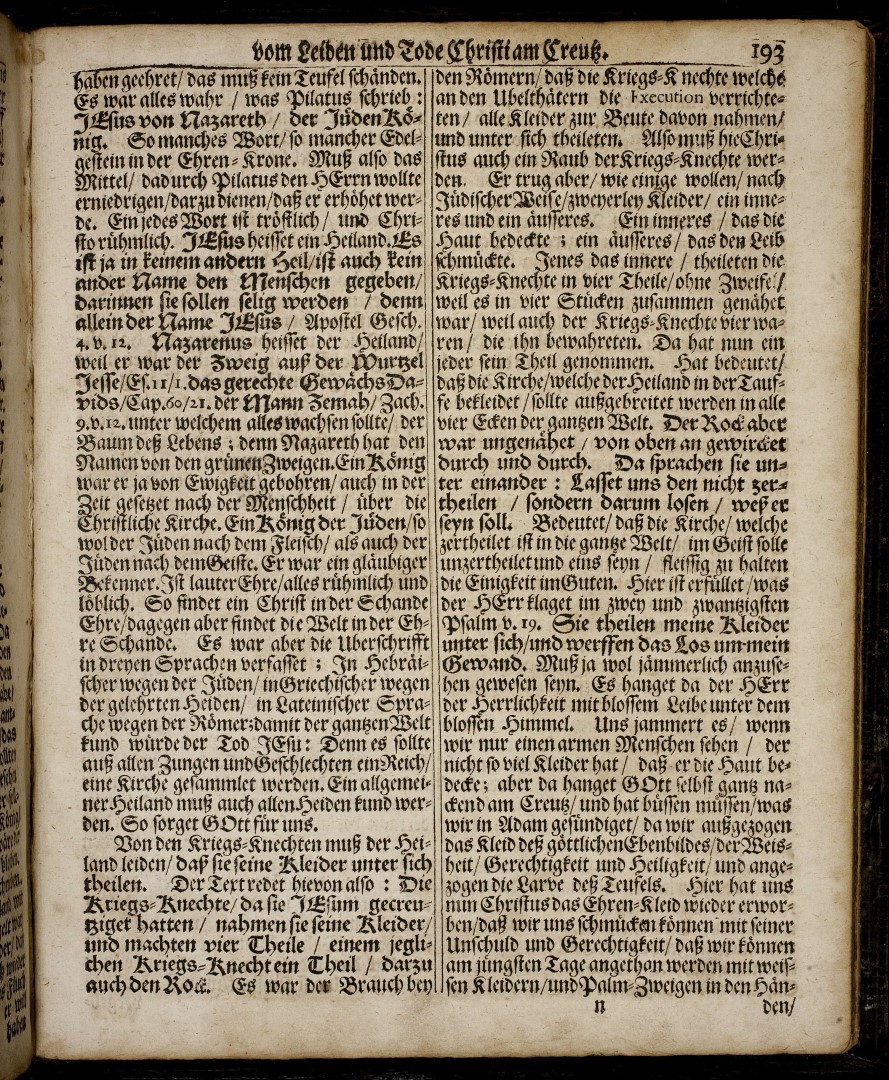
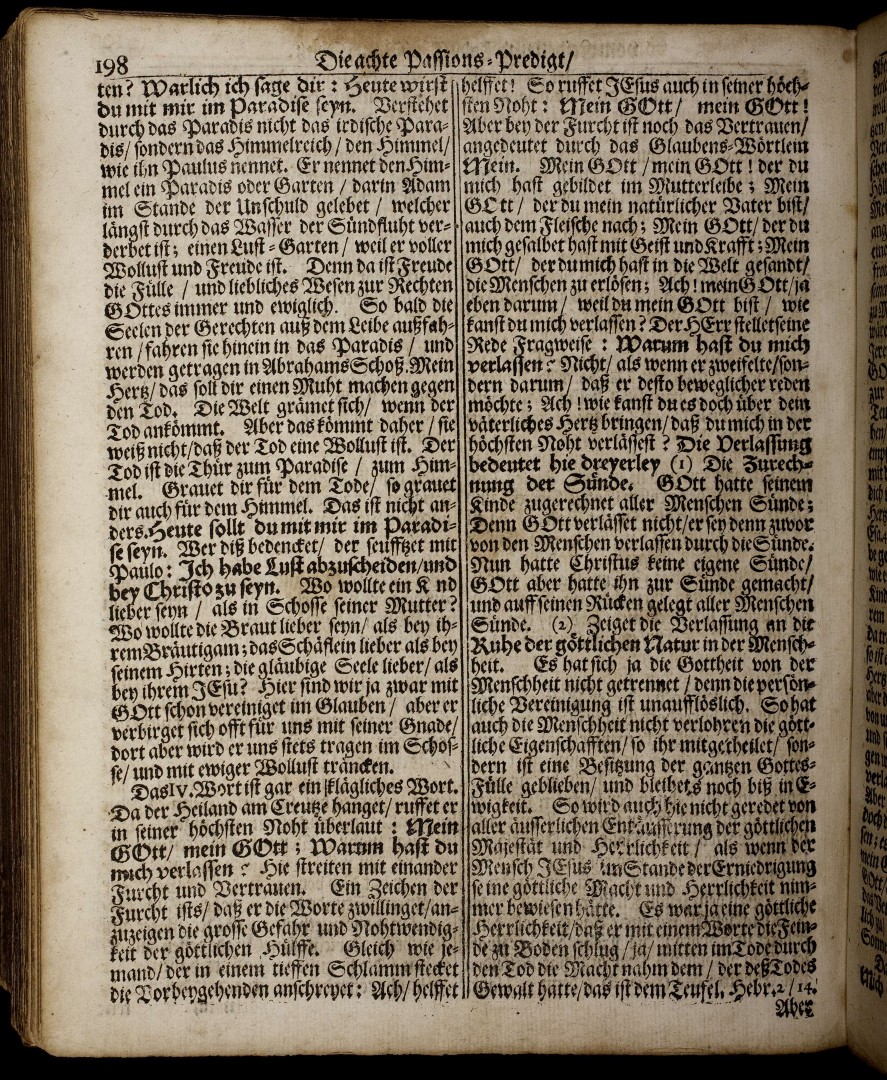
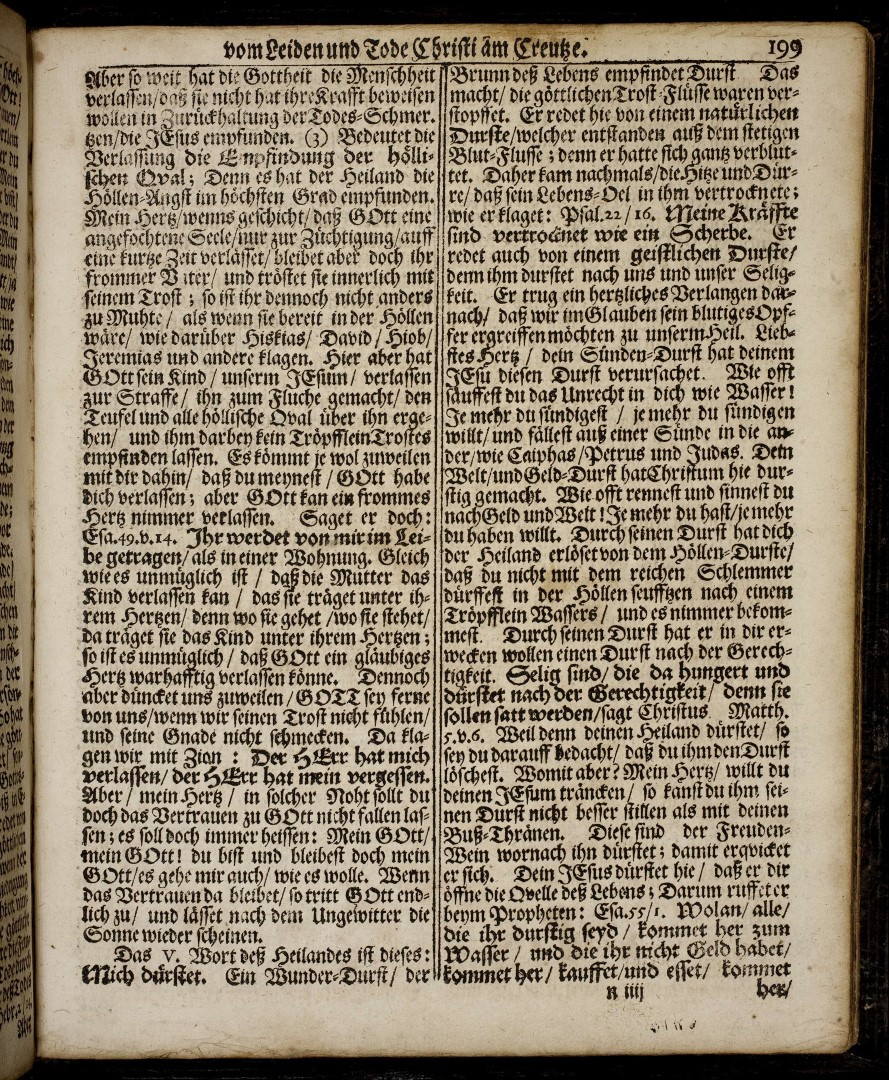
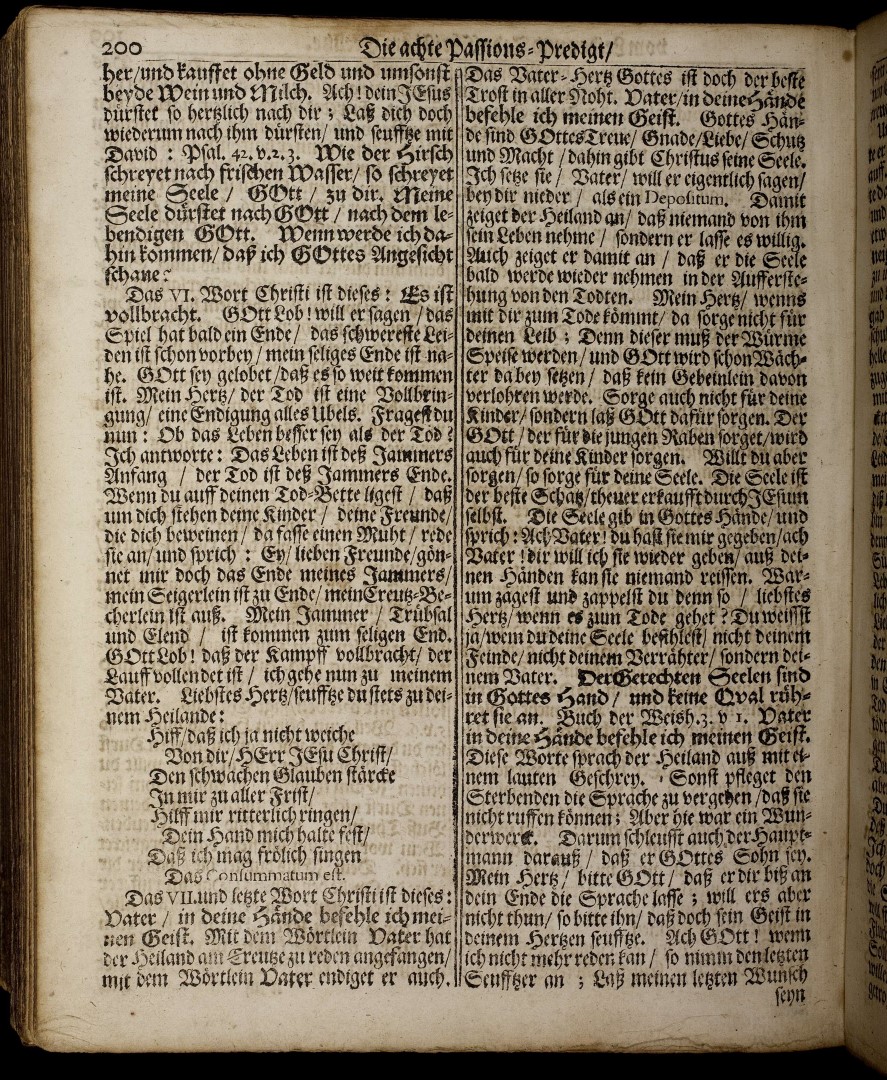
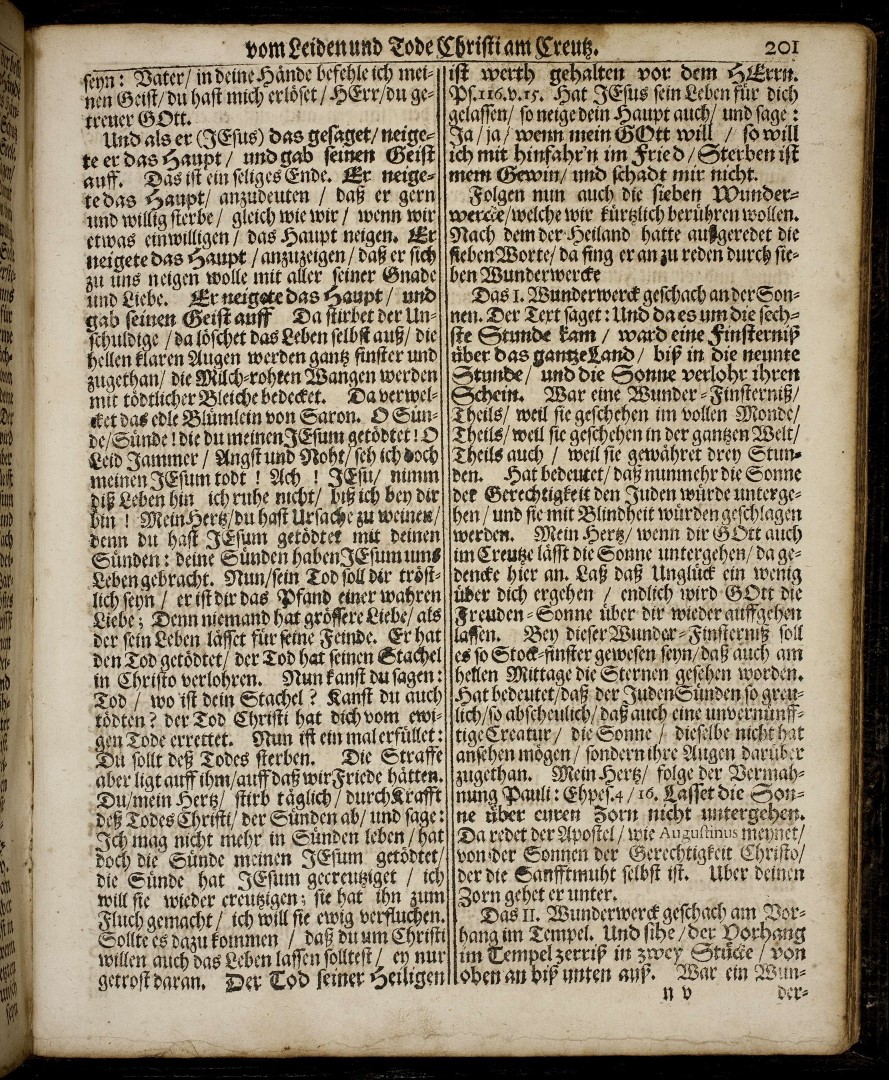
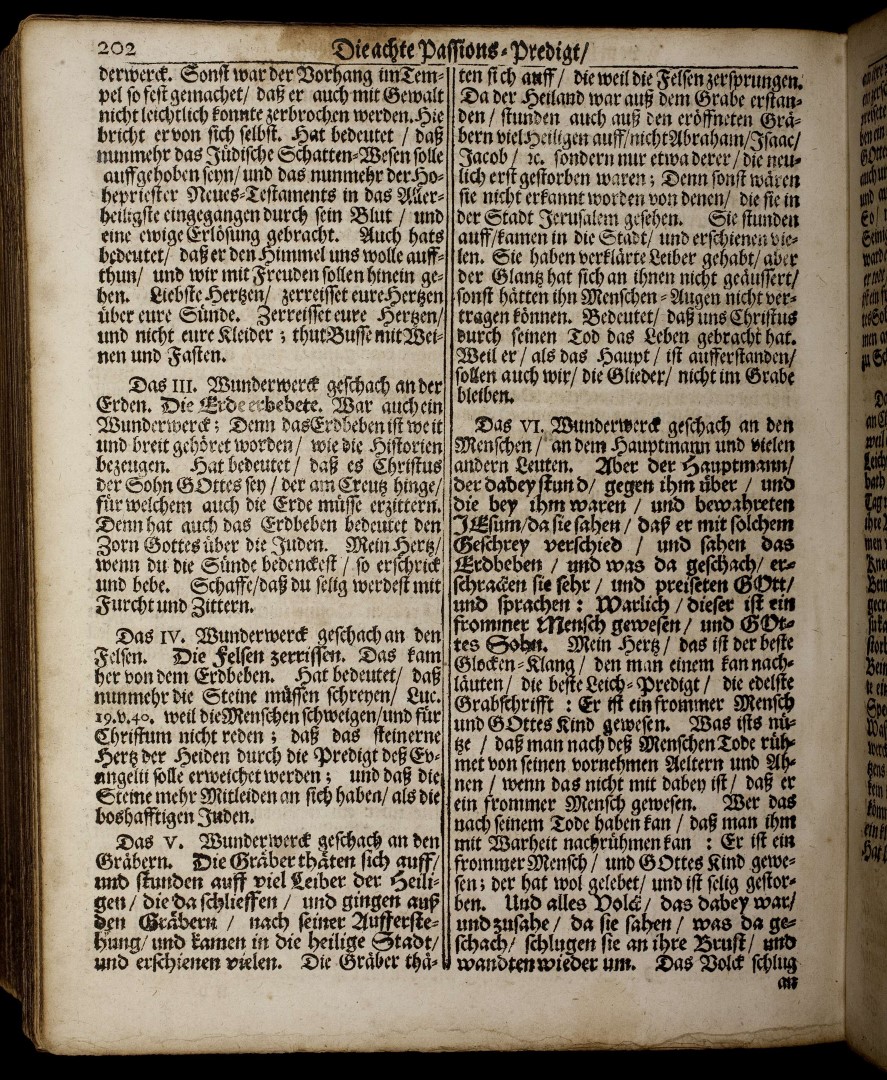
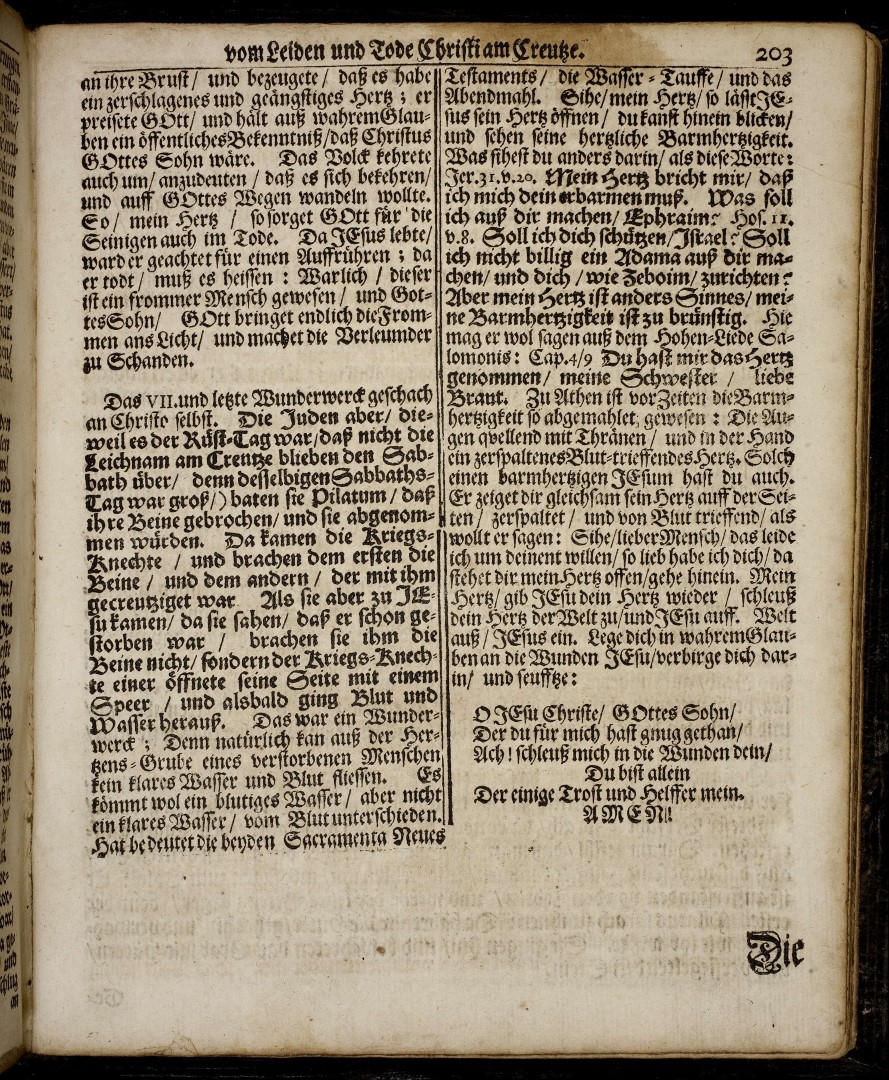
21 March 2021, Dick Wursten
Sources
- Heinrich Müller, Evangelischer Hertzens-Spiegel. In offentlicher Kirchen-Versammlung bey Erklärung der Sonntäglichen und Fest-Evangelien, nebst beygefügten Passion-Predigten (Frankfurt am Main, 1679) – edition consulted: 1732.
- Elke Axmacher, “Aus Liebe will mein Heyland sterben”. Untersuchungen zum Wandel des Passionsverständnis im frühen 18. Jahrhundert (Neuhausen-Stuttgart, 1984).
- Renate Steiger, Gnadengegenwart. Johann Sebastian Bach im Kontext lutherischer Orthodoxie und Frömmigkeit (Stuttgart-Bad Cannstatt, 2002).
- Think of the meditation on the arma Christi, the ‘weapons of Christ’ with which he defeats evil – that is, the arma passionis: the scourges, the crown of thorns, the nails, and so on. Think too of the meditation on all the limbs of the suffering Christ’s body: Salve mundi salutare, a poem by Arnulf of Leuven, long attributed to Bernard of Clairvaux, set by Buxtehude (Membra Jesu nostri) and the source of Paul Gerhardt’s well-known hymn O Haupt voll Blut und Wunden. And think of the Stations of the Cross on Good Friday.↩
- More than that: the interpretation goes back to the third century, where a eucharistic prayer of thanksgiving says: “Ut compleret tuam voluntatem et populum tibi faceret, extendit manus suas cum pateretur, ut patientes liberaret qui in te speraverunt.” And according to legend Bernard of Clairvaux, meditating on this, saw in a vision that Christ came down from the cross and embraced him.↩
- Heinrich Müller, Evangelischer Hertzens-Spiegel. In offentlicher Kirchen-Versammlung bey Erklärung der Sonntäglichen und Fest-Evangelien, nebst beygefügten Passion-Predigten (Frankfurt am Main, 1679), reprinted countless times. The Passion sermons were added from 1688 onwards.↩
- The image of Christ as High Priest is developed in the Letter to the Hebrews.↩
- A few further examples from the devotional literature. Johann Gerhard (1611): “Daß Christus seine Hände außrecket/ hat er gethan/ uns aus Liebe zu umbfahen/ und daß er beydes Jüden und Heyden unter sein Creutz möchte zu sich bringen/ daß sie durch sein heylwertiges Blut besprenget und von Sünden gewaschen würden/ hat uns auch hiemit erworben daß Gott den gantzen Tag über seine Hände zu uns außbreitet Esaiae am 65. und unserer Bekehrung mit großer Gedult erwartet/ darumb sollen wir ihm ja nicht den Rücken kehren/ sondern unter seine Flügel uns samlen” (Gerhard, Erklärung der Historien des Leidens und Sterbens unsers Herrn Christi Jesu, p. 233). Johann Heermann (1618): “Seine Armen spannet er aus am Creutze/ Warumb? Extentus in cruce universum Orbem complexurus, brachia pietatis expandit, sagt Augustinus … Ey so sprich frölich vnd getrost: Intra brachia Salvatoris mei & vivere & mori desidero: In den Armen meines Heylandes begehre ich zu leben vnd zu sterben” (Johann Heermann, Crux Christi, p. 390).↩
- It occurs in the passage from Heermann’s Crux Christi quoted in the previous note as well.↩