Am Abend da es kühle war…
After the deposition
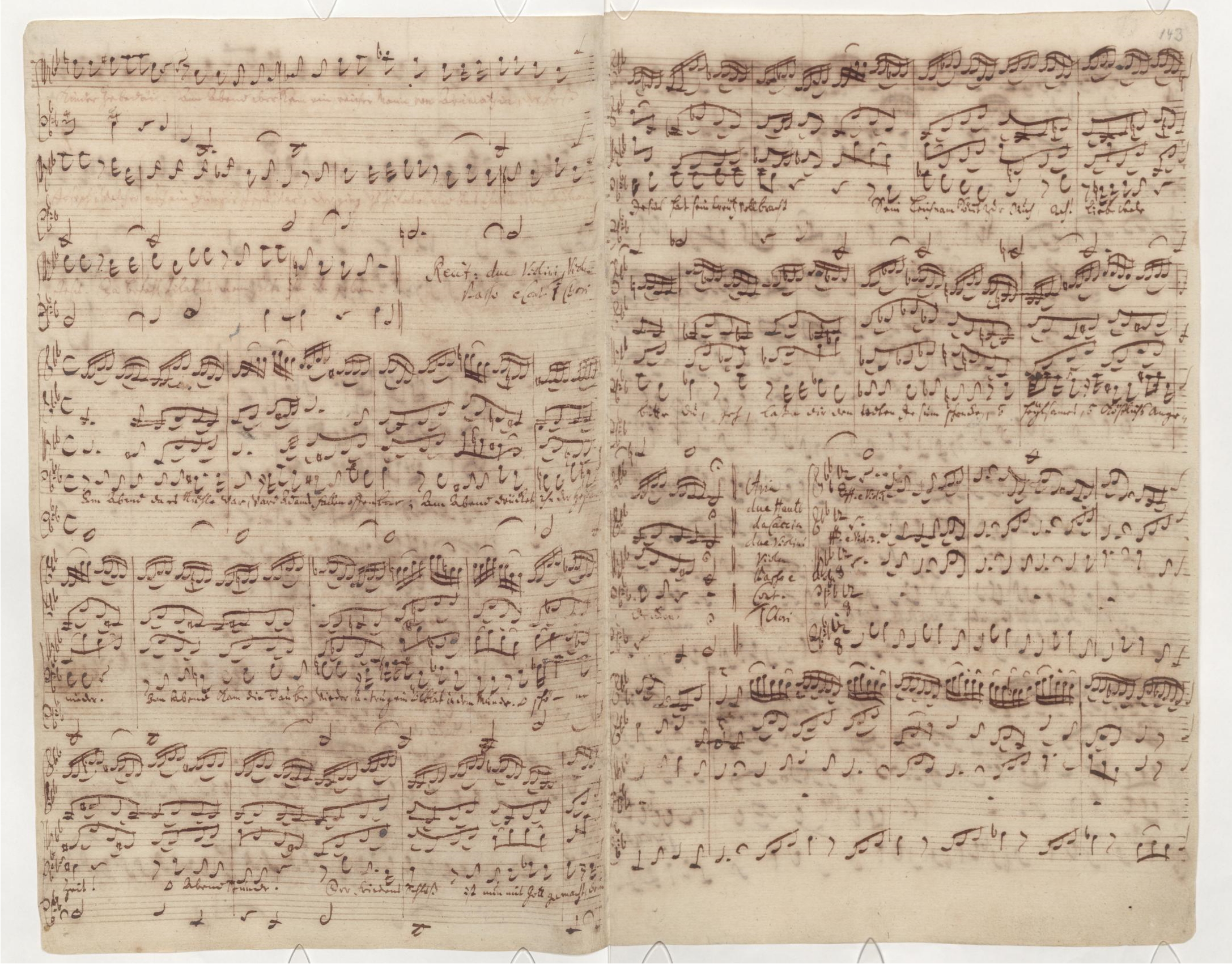
Let me take you to one of the most affecting scenes in the St Matthew Passion: the moment after the deposition from the cross. Evening has fallen, the crowd that came for the spectacle has gone home. It has grown quiet. We are – with the women – in the garden of Joseph of Arimathea. Time for contemplation, meditation, introspection. Am Abend da es kühle war… This phrase echoes Genesis 3:8 in Martin Luther's German Bible translation, where God walks through the Garden of Eden in the cool of the evening ("da der Tag kühle war") after the Fall of Adam :
- Am Abend da es kühle war… (recitative)
- Ich will Jesum selbst begraben… (aria)
Evening: the text (German-English)
Recitative and aria for bass – BWV 244, nos. 64 and 65.
Recitative (arioso) – Violino I/II, Viola, continuo
Am Abend, da es kühle war,
Ward Adams Fallen offenbar;
Am Abend drücket ihn der Heiland nieder.
Am Abend kam die Taube wieder
Und trug ein Ölblatt in dem Munde.
O schöne Zeit! O Abendstunde!
Der Friedensschluss ist nun mit Gott gemacht,
Denn Jesus hat sein Kreuz vollbracht.
Sein Leichnam kömmt zur Ruh,
Ach! liebe Seele, bitte du,
Geh, lasse dir den toten Jesum schenken,
O heilsames, o köstlichs Angedenken!
Translation
At evening, when it had grown cool,
Adam’s fall was brought to light;
at evening the Saviour presses him 1down.
At evening the dove returned
and carried an olive leaf in its beak.
O lovely time! O evening hour!
Peace has now been made with God,
for Jesus has accomplished his cross.
His body comes to rest.
Ah, dear soul, ask –
go, have the dead Jesus given to you,
o salutary, o precious keepsake!
Aria – Oboe da caccia I/II, Violino I/II, Viola, continuo
Mache dich, mein Herze, rein,
Ich will Jesum selbst begraben.
Denn er soll nunmehr in mir
Für und für
Seine süße Ruhe haben.
Welt, geh aus, lass Jesum ein!
Translation
Make yourself clean, my heart:
I will bury Jesus myself.
For from now on he shall have
in me, for ever and ever,
his sweet repose.
World, get out; let Jesus in!
To my mind this is one of the finest texts in the St Matthew Passion – because of the surprising and meaningful chain of narrative elements strung together around ‘evening’. And then the music (there is a recording below): an inward evening prayer on the theme of evening, full of atmosphere. If this does not open the way inward, nothing will.
Three evenings
Which evenings does the text have in mind?
- The first association is with an evening in the garden of Eden. According to Genesis 3, God used to walk there in the cool of the evening, and would speak with ‘the Man’ (ha-adam, in Hebrew) as a man speaks with his friend. But evil had raised its head and the man had taken the forbidden fruit. And when, on that evening, he hears God approaching, he hides. ‘Man, where are you?’, God calls. He cannot find his friend. Adam can hide no longer and comes out. He is afraid. He is ashamed of his nakedness. And when God asks him how this has come about, the blame game begins that has lasted to this day: the other human being (in this case the woman) did it, it is not my fault. That is what, with a heavy word, we call the Fall. The human predicament: from that evening onward, paradise is lost. That is the first evening of the recitative. But then the musing soul remembers another evening as well.
- The next association is the evening when the flood came to an end, and the dove returned to the ark – the floating chest, in German der Kasten – with an olive leaf in its beak, a sign that the great flood was over: a sign of hope, of a new beginning.
- The last association is where it all began: the evening of Jesus’ burial. In it, Jesus takes the sin of humankind with him into the grave. For the contemplating soul knows: it is not only the beloved rabbi Jesus who is carried to the grave here – which grieves us so (‘Wir setzen uns mit Thränen nieder…’) – no, here the fate of the old Adam is sealed, the power of sin broken, the old serpent crushed, ‘pressed to the ground’: ‘Da drücket ihn (accusative) der Heiland (subject) nieder.’ There the Saviour overcomes him, the serpent-satan. And so God and man are reconciled. There is peace: Der Friedensschluss ist nun gemacht. In Christ. And that peace – and Christ himself – we may now have given to us. It is a beautiful recitative. Bach makes an arioso of it. Moving music.
Not only Bach but Picander too surpassed himself here: a fine, well-turned text, rich in substance. And not because Picander was such an original poet, but precisely because he was so good at casting other people’s thoughts into metre and rhyme. Every turn of phrase, every association in this recitative and aria belongs to the stock imagery of a good Passiontide meditation. Once again it is highly likely that Picander had Heinrich Müller’s Hertzens-Spiegel open beside him as he wrote. Read along in Müller’s ninth meditation on the Passion of Christ, where he dwells on the burial. The opening words sound strangely familiar: Am Abend, da der Tag kühle worden war. Every element of the recitative is there.
Heinrich Müller: ninth Passion sermon
Zum Begräbnis Jesu
Am Abend, da der Tag kühle worden war, kam die Sünde der Menschen erstlich ans Licht, am Abend nimmt sie Christus wieder mit sich ins Grab, daß ihr nicht mehr gedacht werde. Um die Vesper-Zeit kam das Täublein Noah zum Kasten, und siehe, ein Oel-Blat hatte sie abgebrochen, und trugs in ihrem Munde, da vernahm Noah, daß das Gewässer gefallen wäre auff Erden (1 Mos. 8:11).
Um dieselbe Zeit kehrt auch unser Jesus, das reine, fruchtbringende Täublein, das uns rein macht von allen Sünden, und erfüllet mit Früchten der Gerechtigkeit, in seinen Grab-Kasten zur Ruhe, trägt ein Oel-Blat in seinem Munde. Sein Begräbniß versichert uns der Barmhertzigkeit Gottes, des Friedens mit seinem Vater, und daß das Zorn-Gewässer nunmehr gefallen sey. Mein Hertz, der Abend ist da … Ach, so lasse Jesum nicht, bitte ihn, daß er bey dir einkehre, und seine Ruhe nehme in deinem Hertzen …6
At evening, when the day had grown cool, the sin of humankind first came to light; at evening Christ takes it back with him into the grave, so that it shall be remembered no more. About the hour of vespers the little dove came to Noah’s ark, and behold, she had plucked an olive leaf and carried it in her beak, and by this Noah knew that the waters had abated from the earth (Genesis 8:11).
At that same hour our Jesus too – the pure, fruit-bearing dove who makes us clean from all sin and fills us with the fruits of righteousness – enters his grave-chest to rest, carrying an olive leaf in his mouth. His burial assures us of God’s mercy, of peace with his Father, and that the waters of wrath have now abated. My heart, the evening is here … Ah, then do not let Jesus go; ask him to lodge with you, and to take his rest in your heart …
In bold: the turns of phrase that return in Picander’s recitative.
When we look closely at the aria that follows, the kinship with Müller is just as striking. After the meditation that moves the heart comes the call to make what has been so beautifully set before us our own – literally to appropriate it. Christ the Saviour must not merely find a resting place out there; no, he must rest in us (seine süße Ruhe haben… in mir; presently it will be Ruhe sanfte). The place reserved for this from of old is the human heart: Paratum cor meum, says the psalmist (Psalm 108), and Christians have repeated it after him for centuries in many a eucharistic prayer. That heart must of course be prepared for the coming of the Lord. It must be made ready, made clean (Mache dich, mein Herze, rein…). And then Christ must be invited in. Bury him deep in your heart. Then, at the evening of your life too, peace with God will be an accomplished fact.
Music: Michael Schopper sings…
With these devout words in mind we can listen to Michael Schopper, who sings this recitative and aria with Ton Koopman incomparably well. I know of no other singer who can sing so inwardly. There is no display here; nothing is ‘put out’, it is all ‘taken in’. It touches the heart – which is the point, for that is where it is going.
Salomon Franck, Passionsandachten
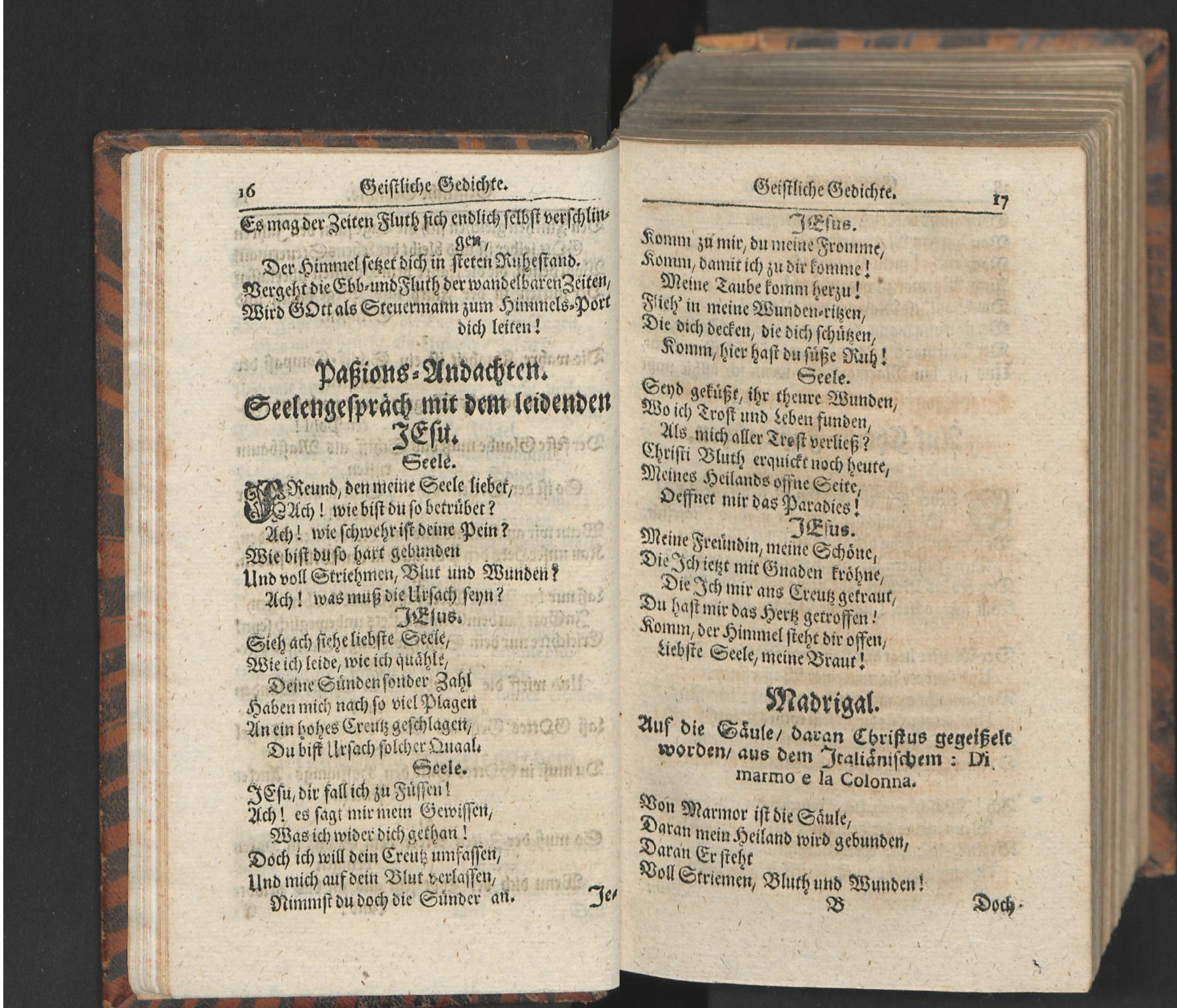
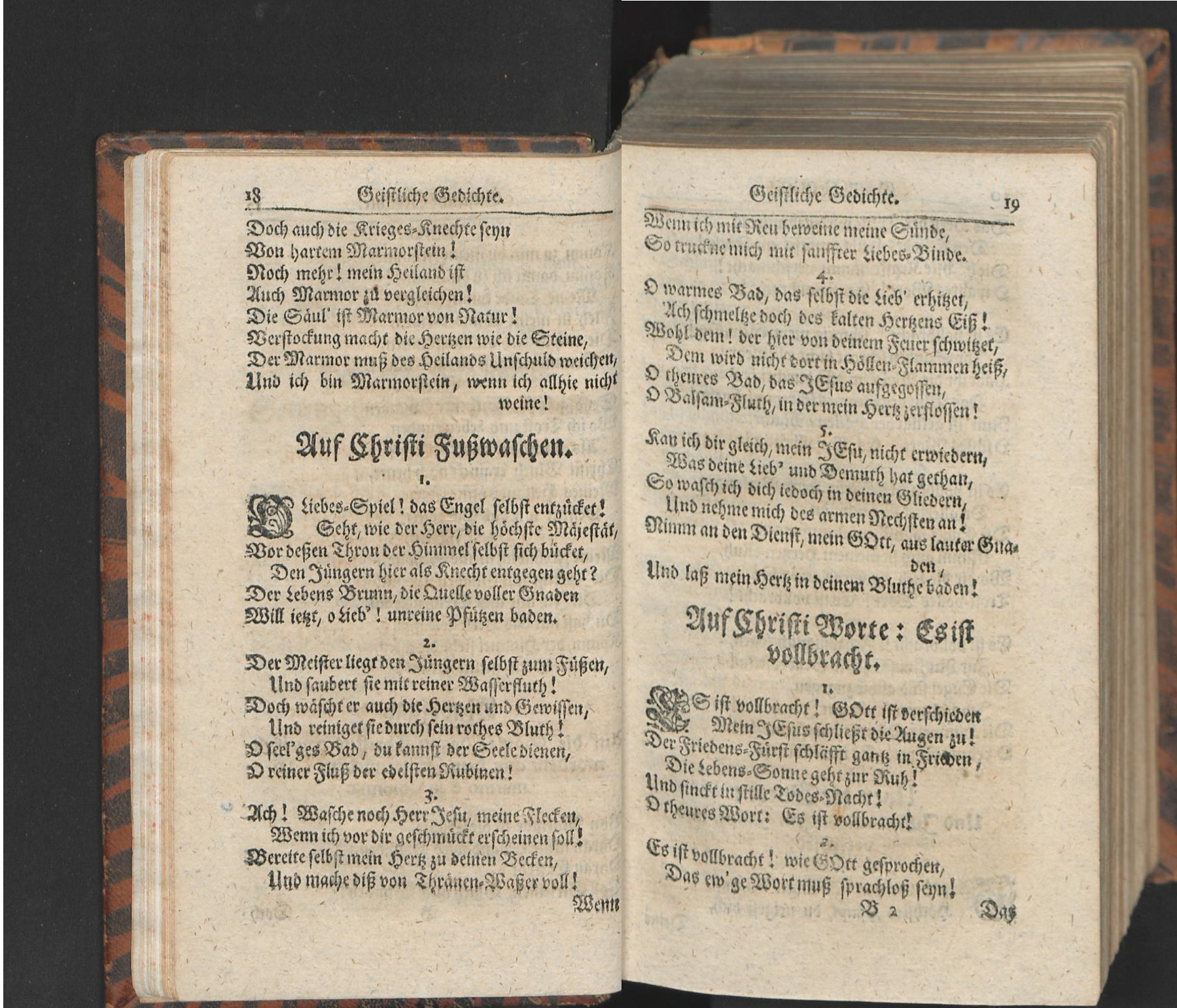
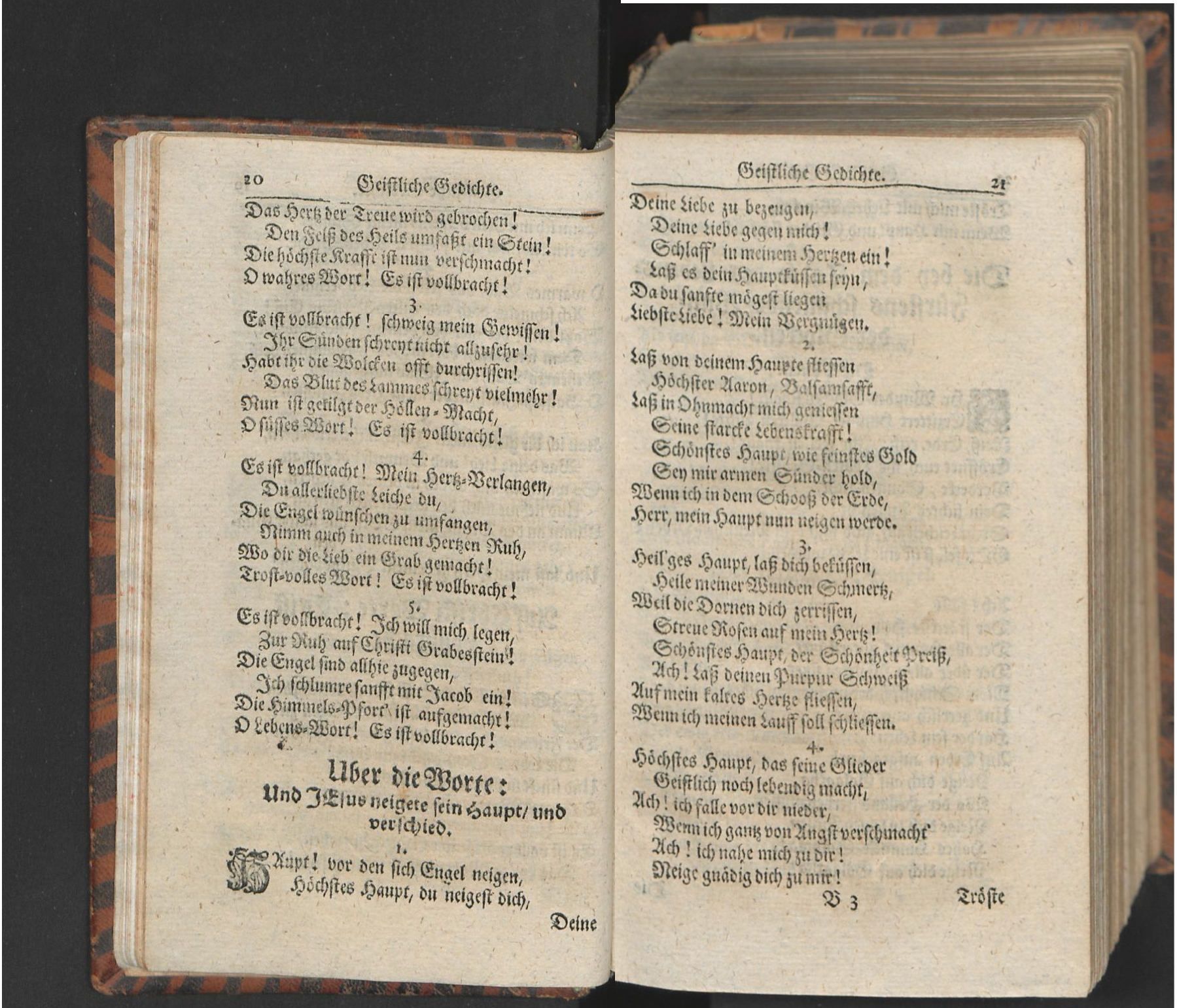
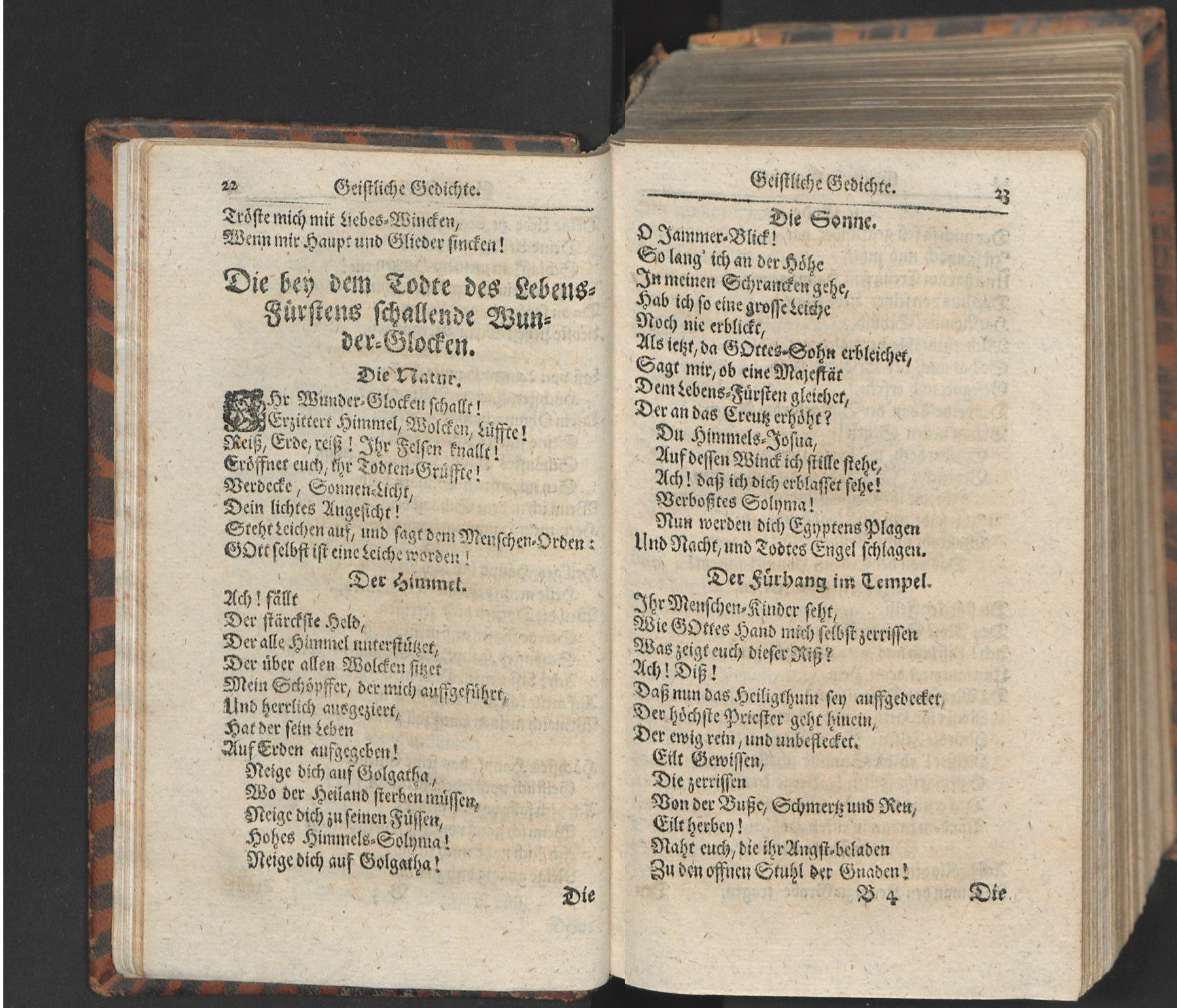
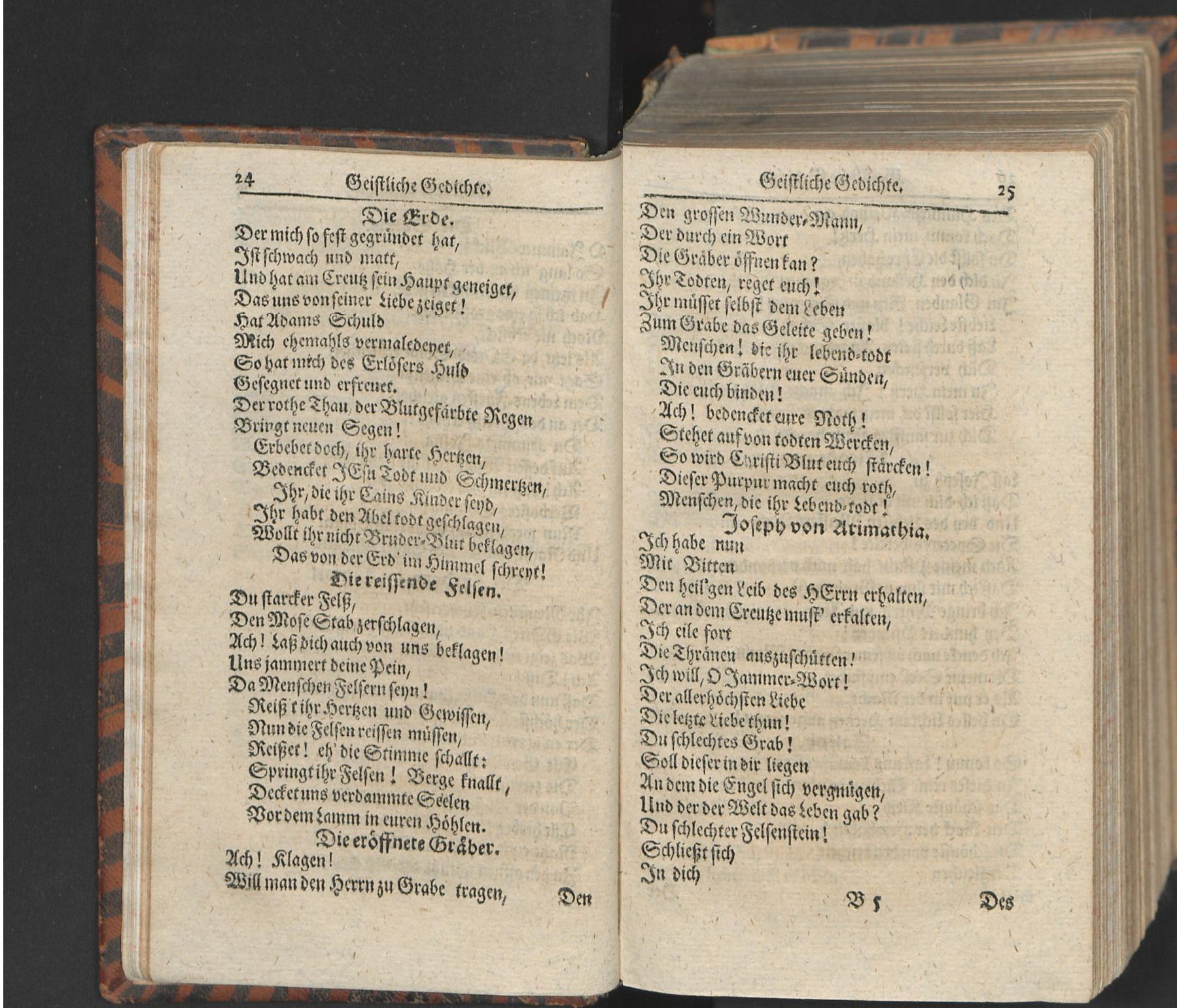
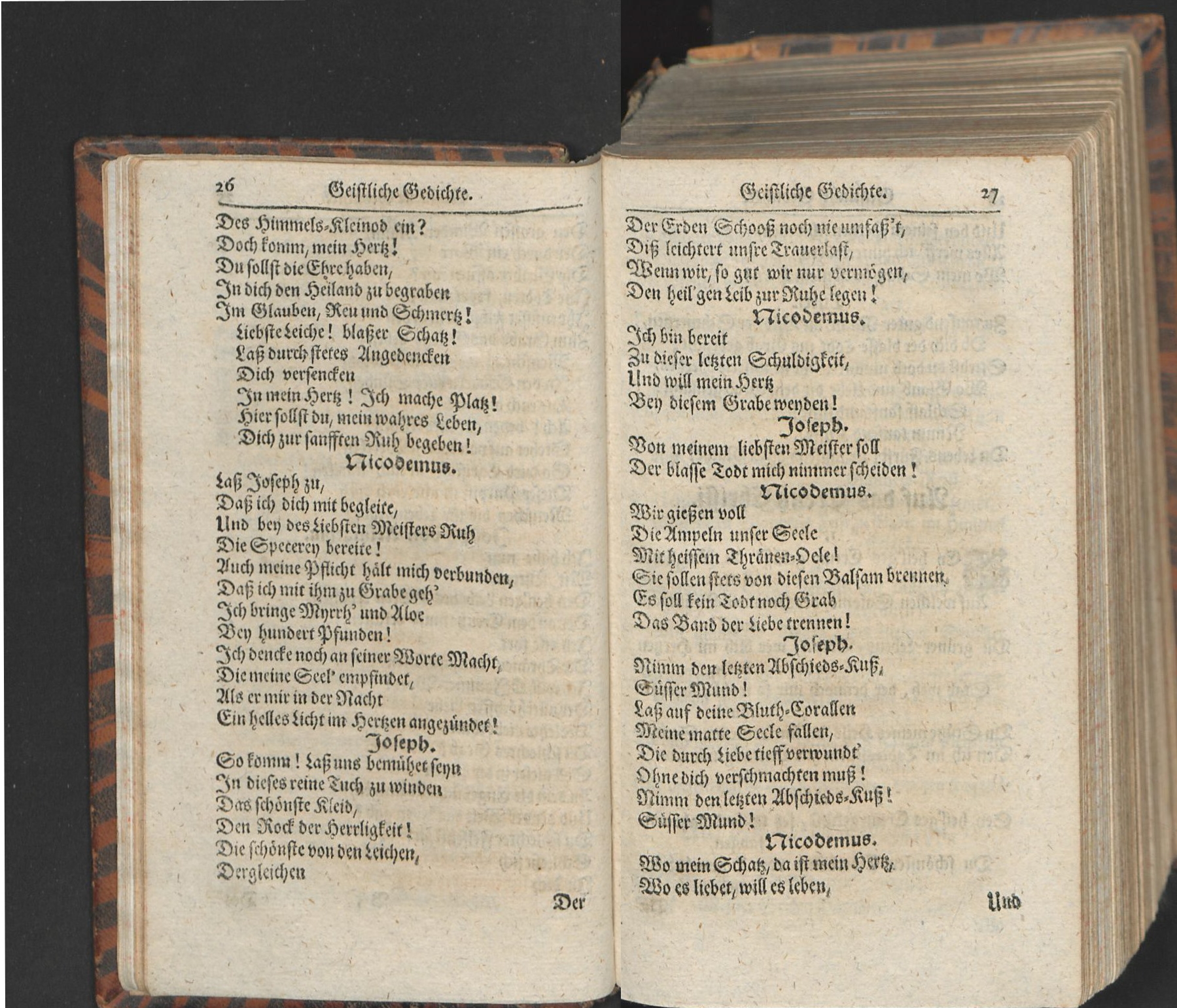
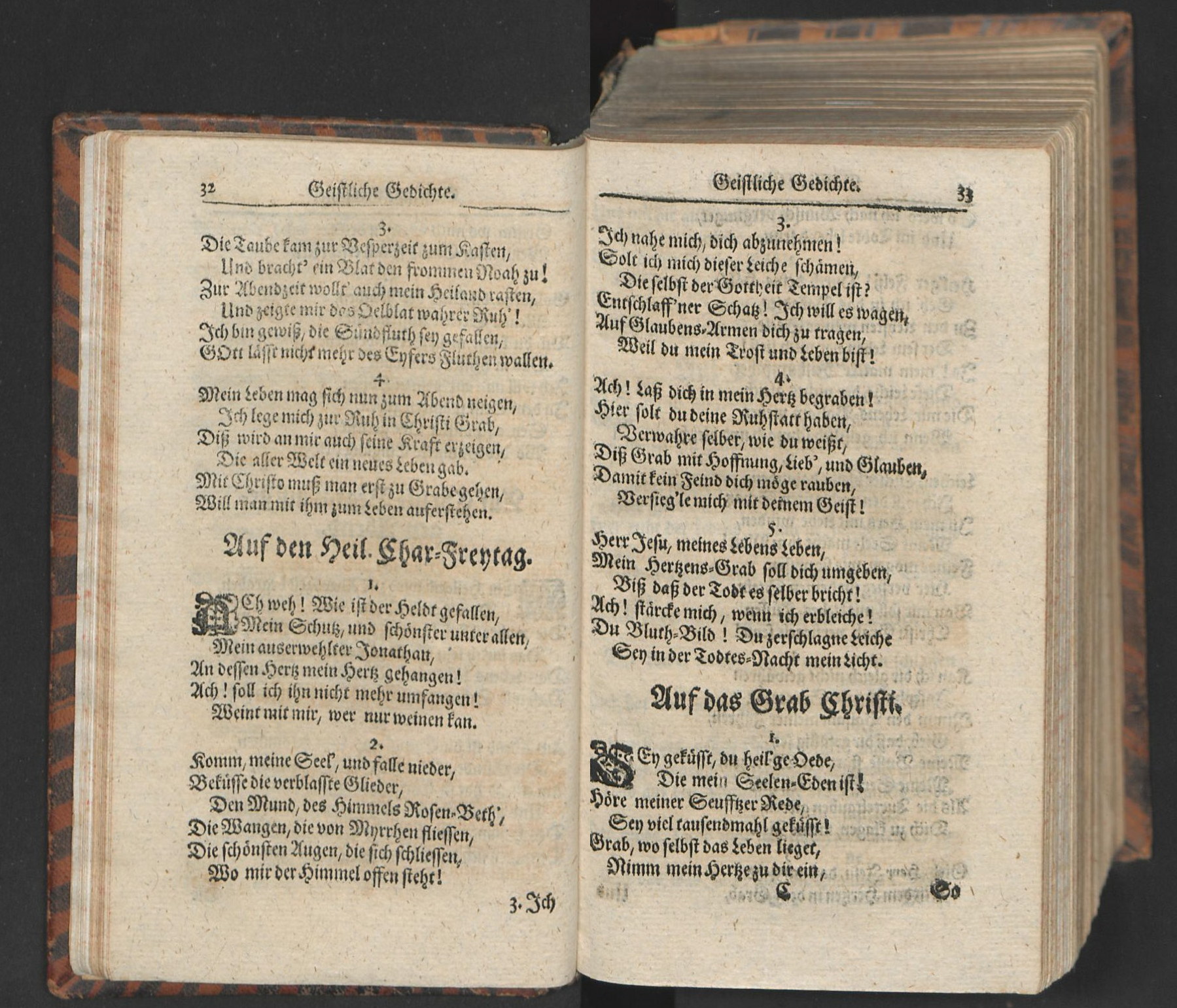
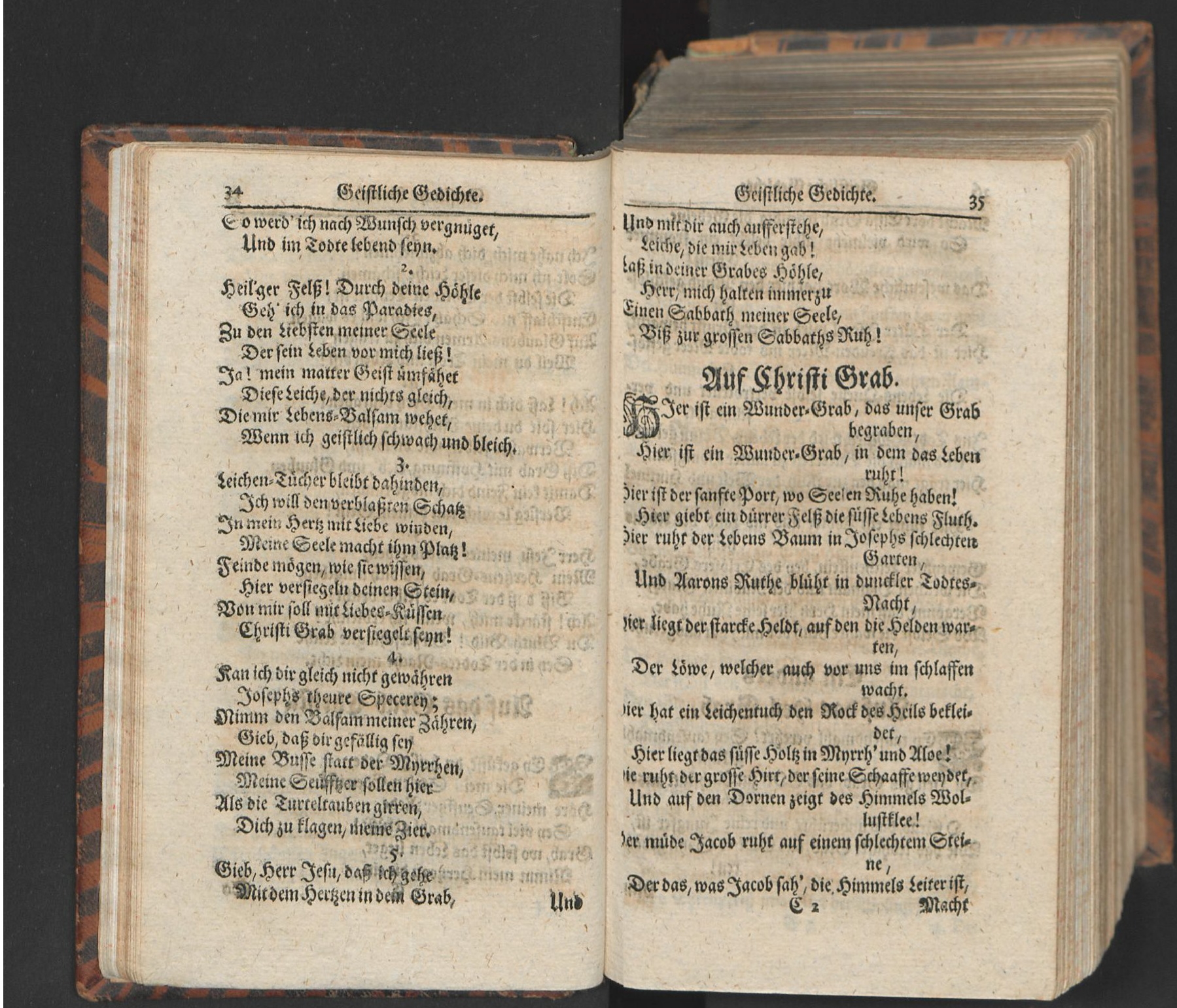
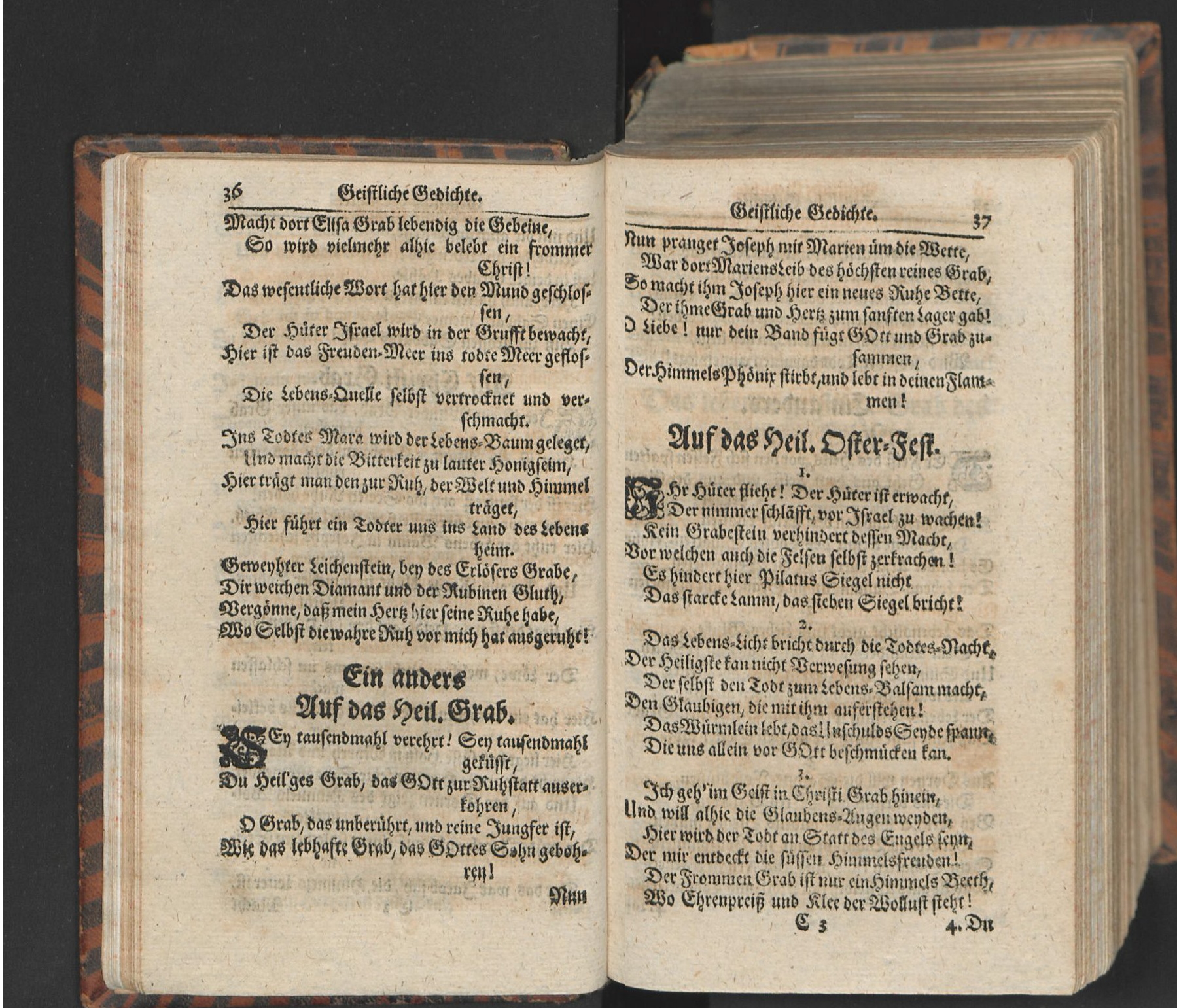
How standard this meditation on the burial of Jesus was – and on burying Jesus in your own heart, so that you may live – appears from another source as well: a poem by a poet Bach knew personally. Salomo Franck (1659-1725) was already the éminence grise of the Weimar court when Bach arrived there as a young organist. He was a jurist, a librarian and ‘Ober-Consistorial-Secretarius’ – and court poet, a worthy predecessor of Goethe. Franck wrote the librettos for Bach’s early Weimar cantatas, among them Himmelskönig, sei willkommen (1713). His texts are well above average: a real poet. In 1711 Franck published his collected poems, Geist- und Weltliche Poesien. The volume contains a whole series of poems under the collective title Passionsandachten, Seelengespräch mit dem leidenden Jesu – meditations on the Passion, conversations of the soul with the suffering Christ. You can browse them all at the foot of this page. Here is the title page.
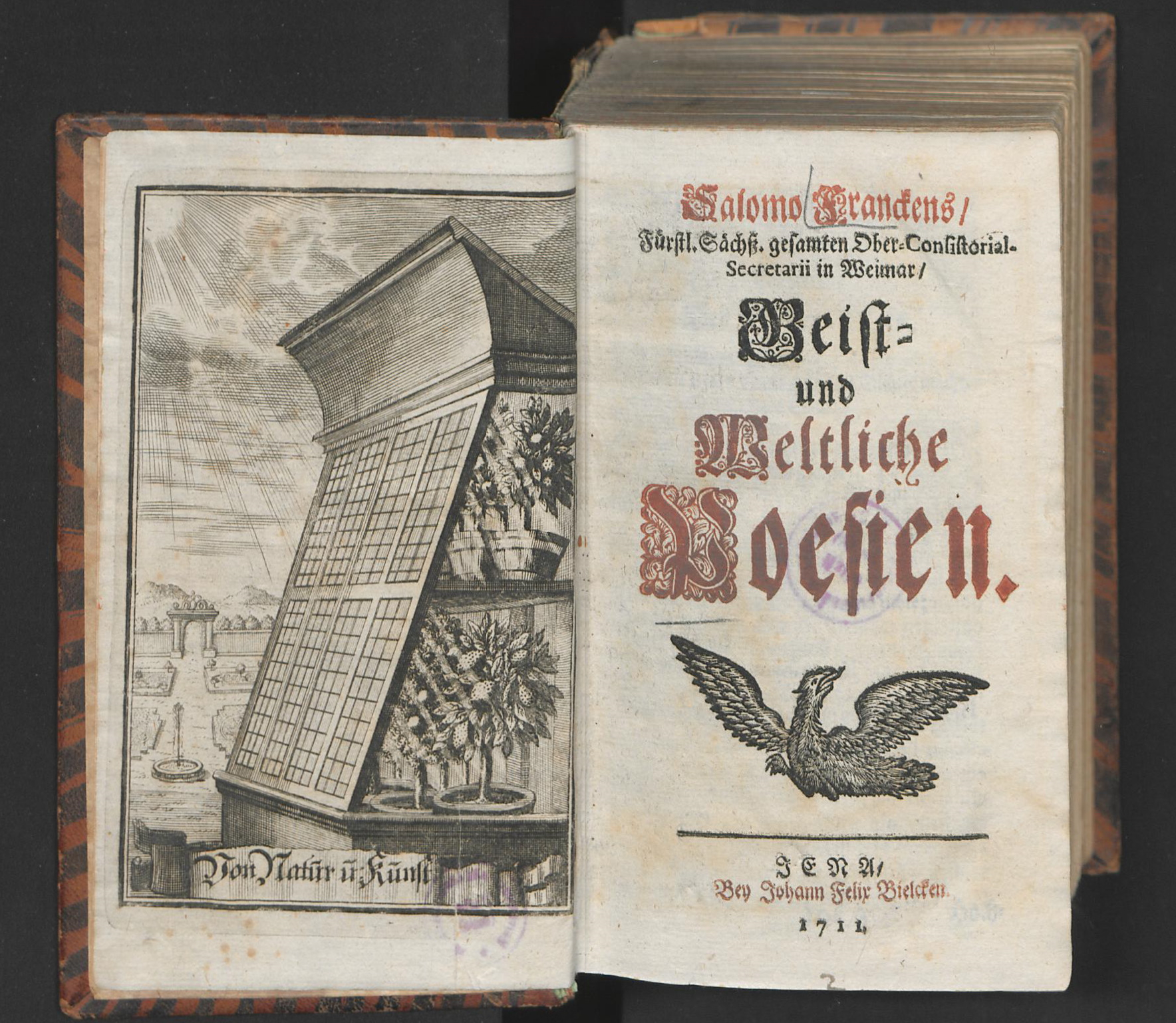
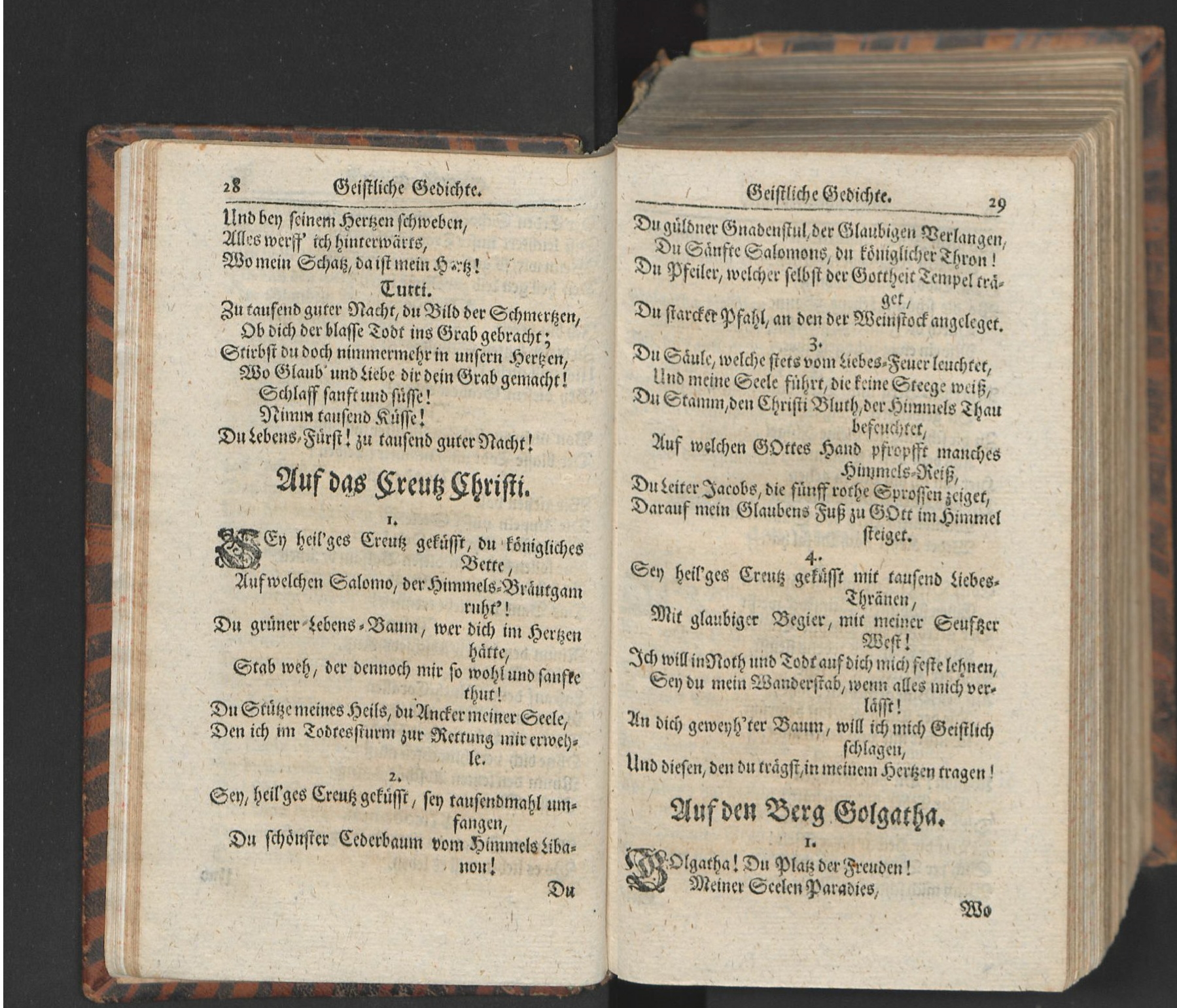
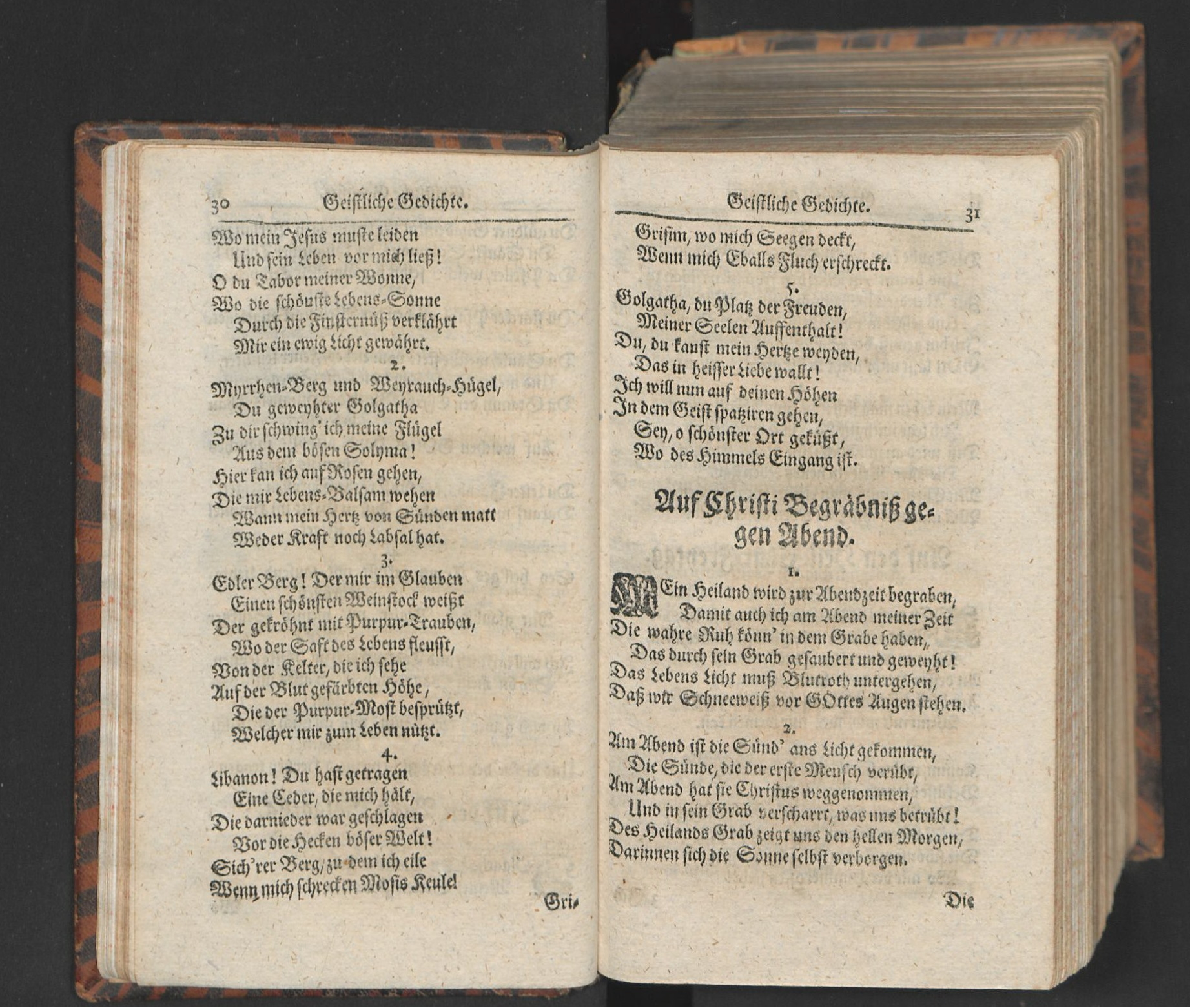
What Heinrich Müller does in evocative prose in his nine Passion sermons, Franck does in verse: he pauses at each station of the way of the cross and calls on the reader to meditate on what he sees there. It would not surprise me if Franck too had Müller’s Passion sermons on his shelf, though his poetic imagination reaches further than Müller’s. He adds accents of his own, let us say. One of the scenes is Auf Christi Begräbnis gegen Abend.
Auf Christi Begräbnis gegen Abend – poem (German-English)
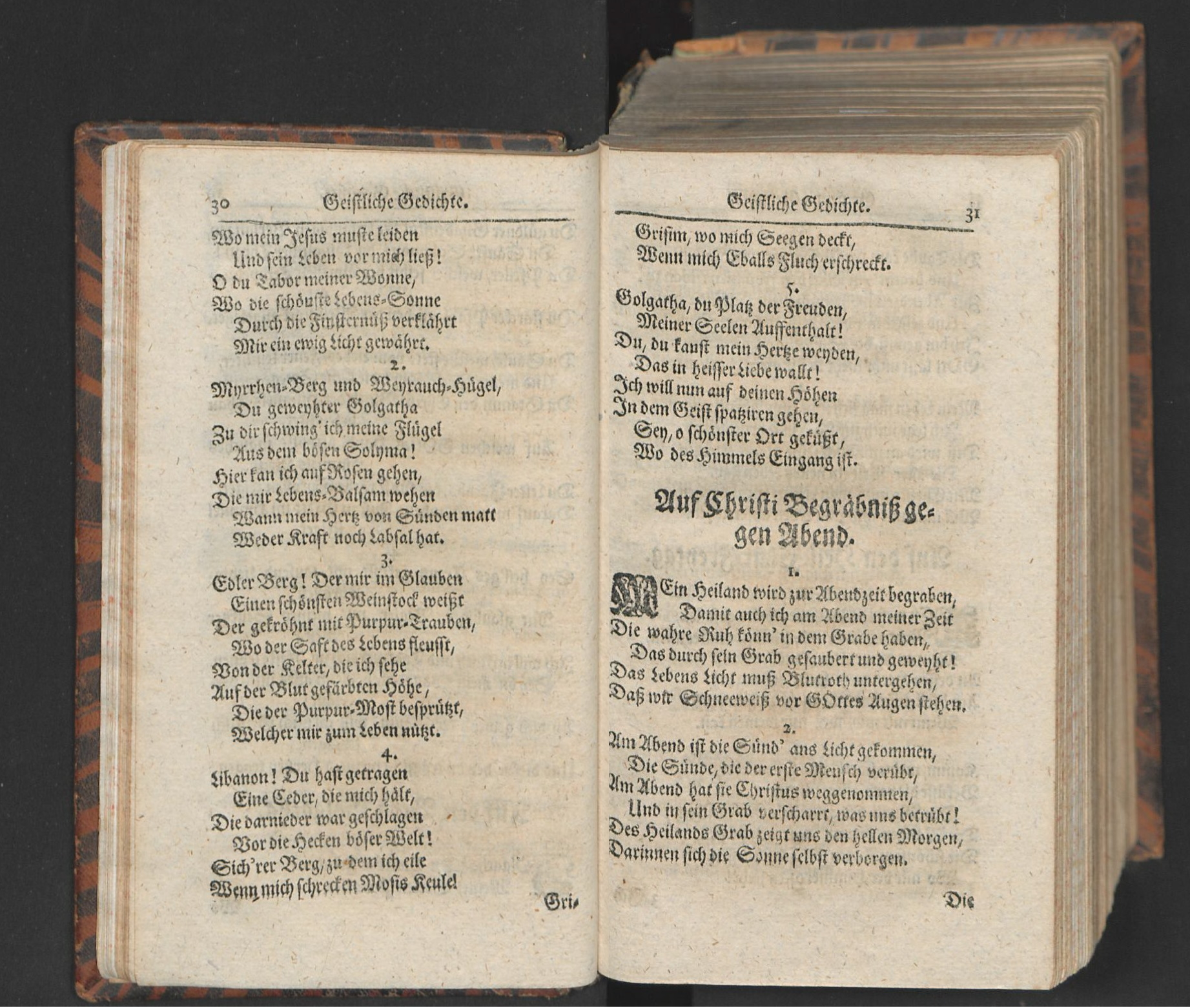
Mein Heiland wird zur Abendzeit begraben,
Damit auch ich am Abend meiner Zeit
Die wahre Ruh könn in dem Grabe haben,
Das durch sein Grab gesäubert und geweiht!
Das Lebenslicht muß blutroth untergehen,
Daß wir schneeweiß vor Gottes Augen stehen.
Am Abend ist die Sünd ans Licht gekommen,
Die Sünde die der erste Mensch verübt,
Am Abend hat sie Christus weggenommen,
Und in sein Grab verscharrt, was uns betrübt.
Des Heilands Grab zeigt uns den hellen Morgen,
Darinnen sich die Sonne selbst verborgen.
Die Taube kam zur Vesperzeit zum Kasten,
Und bracht ein Blatt dem frommen Noah zu.
Zur Abendzeit wollt auch mein Heiland rasten,
Und zeigte mir das Oelblatt wahrer Ruh!
Ich bin gewiß, die Sündfluth sei gefallen,
Gott läßt nicht mehr des Eifers Fluthen wallen.
Mein Leben mag sich nun zum Abend neigen,
Ich lege mich zur Ruh in Christi Grab,
Dies wird an mir auch seine Kraft erzeigen,
Die aller Welt ein neues Leben gab.
Mit Christo muß man erst zu Grabe gehen,
Will man mit ihm zum Leben auferstehen.
My Saviour is buried at evening time,
so that I too, at the evening of my days,
may find true rest within the grave
that his own grave has cleansed and hallowed.
The light of life must set blood-red,
that we may stand snow-white before God’s eyes.
At evening sin came to the light,
the sin the first man committed;
at evening Christ took it away
and buried in his grave all that afflicts us.
The Saviour’s grave shows us the bright morning:
the sun itself lay hidden there.
The dove came to the ark at vesper time
and brought a leaf to faithful Noah.
At evening my Saviour too would rest,
and showed me the olive leaf of true repose.
I am certain that the flood has abated,
that God will let the waters of his zeal rise no more.
My life may now incline towards evening;
I lay myself to rest in Christ’s grave.
It will show its power in me as well,
the power that gave the whole world new life.
With Christ one must first go down into the grave,
if one would rise with him to life.
It is the same biblical wordplay as in the recitative, particularly in stanzas 2 and 3. The kinship had already been noticed by Philipp Spitta, Bach’s first biographer.2 Spitta concluded from it that Picander had Franck’s poem before him when he wrote the recitative.3 That sounds convincing on a first reading – if you do not know Müller – but it is concluded rather too quickly. Similarity is not yet dependence. The trains of thought are not original; as I said above, this is stock imagery for any meditation on this event. What is striking is how close Picander stays to Müller’s words. He seems to have done little more than set Müller’s poetic prose in rhyme; many turns of phrase are taken over almost verbatim.4
Müller and Franck supply the context that clarifies Picander’s sometimes cryptic lines. This is true above all of his third line, notorious among translators: ‘Am Abend drücket ihn der Heiland nieder’. Every listener and every translator asks: who is being pressed to the ground by the Saviour here, and what does that mean? The context in Müller and Franck makes the answer plain. In Franck’s poem it is unmistakable: the sin of humankind is taken along into the grave. So it concerns the old or first Adam, caught in the power of evil, and with him all human beings (Romans 6). In Picander, working from Müller, we should rather think of the old serpent, satan, whom Jesus defeats and presses to the ground. Picander had in mind the ‘mother of all promises’ of Genesis 3:155 and means that Christ, in accomplishing his suffering, crushes the head of the old serpent.
Palm Sunday 2021, Dick Wursten
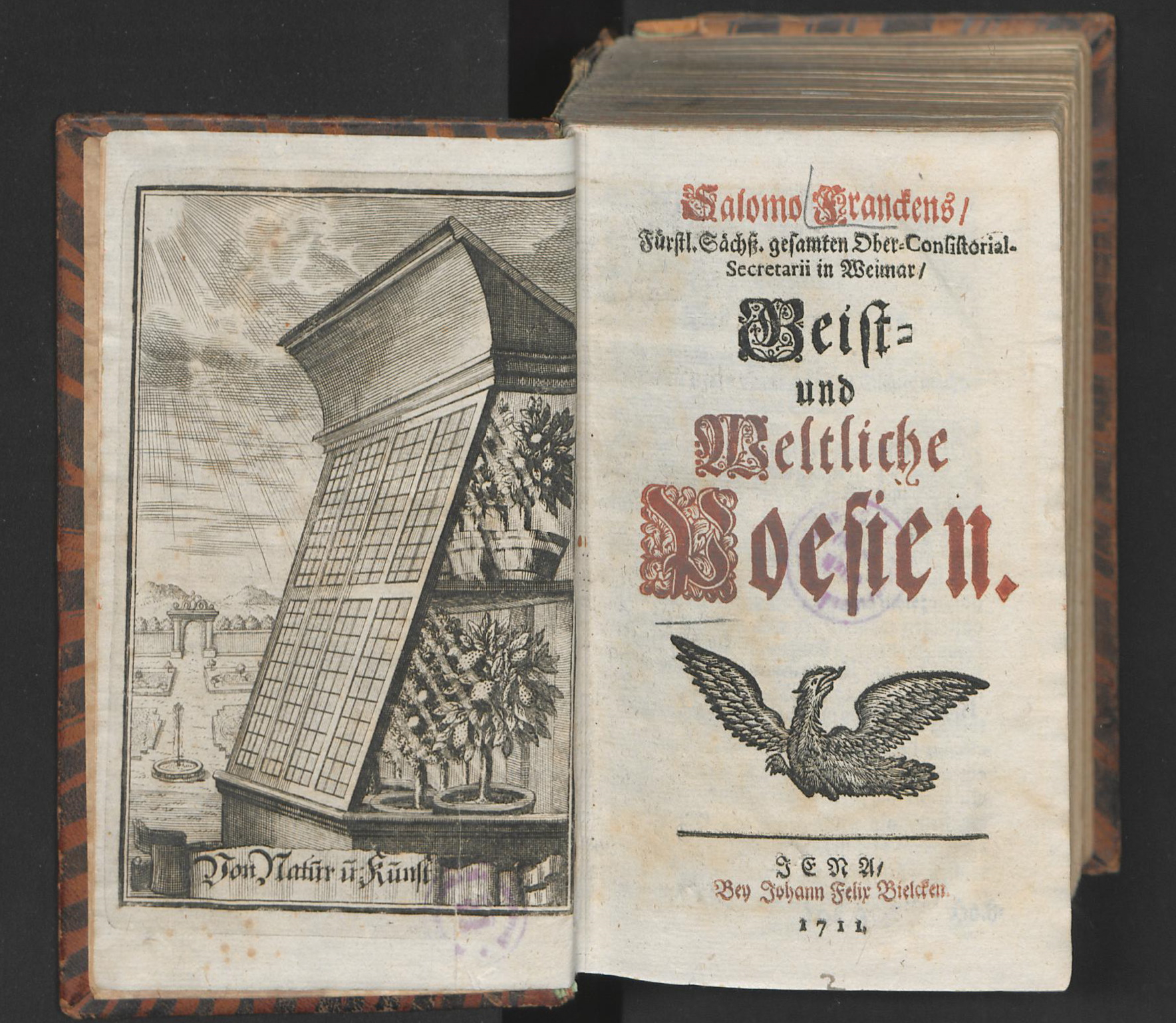
The Passionsandachten in facsimile
Here you can read all the poems in the Passionsandachten section – some of them genuine conversations, dialogues, little plays. They are pages 16-37 of Salomo Franck’s collected poems (1711). Click an image to open it full size.
- "him". One can choose: The old Adam, or the serpent-satan.↩
- Philipp Spitta, Johann Sebastian Bach, 2 vols., 1873-1880, pp. 174-175: “Bach aber liebte diesen Dichter um seiner innigen, schwärmerischen Empfindung willen, kein andrer als er kann es gewesen sein, der Picandern auf ihn hinwies. Unter Francks Gedichten trägt eines die Überschrift »Auf Christi Begräbniß gegen Abend« und lautet so” – followed by stanzas 2 and 3.↩
- And, as nineteenth-century historians often did, in his Entdeckerfreude he goes one better: he asserts with great confidence that Bach showed this poem to Picander and said, here, this is the text I want for my great Passion. Pure invention – but repeated as fact ever since.↩
- On Müller as a source for the St Matthew Passion see Elke Axmacher, ‘Ein Quellenfund zum Text der Matthäus-Passion’, Bach-Jahrbuch 64 (1978), 181-191.↩
- After the Fall, God says: ‘I will put enmity between thee and the woman, and between thy seed and her seed; it shall bruise thy head, and thou shalt bruise his heel’ (Genesis 3:15). Interpreted by the church as a promise of the coming of Christ from Mary’s line.↩
- Heinrich Müller, Hertzens-Spiegel, ninth Passion sermon, pp. 446f.↩